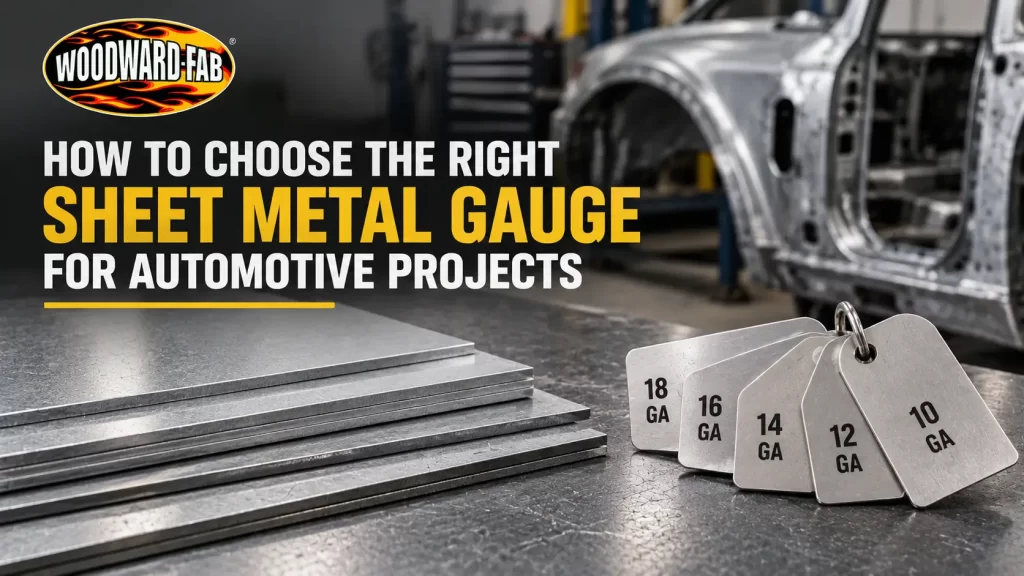
Sheet Metal Gauge for Automotive Projects

How to Choose the Right Sheet Metal Gauge for Automotive Projects

Choosing the right sheet metal gauge for automotive projects is one of the most important decisions a fabricator makes. The thickness of the metal affects strength, weight, flexibility, weldability, forming performance, durability, and the final appearance of the vehicle. Whether you’re restoring a classic car, fabricating custom body panels, repairing rust damage, or building components for a race car, using the wrong sheet metal thickness can make fabrication unnecessarily difficult. Metal that is too thin may distort or crack, while metal that is too thick can be difficult to form and add unnecessary weight. So, what gauge sheet metal should you use for automotive work? The answer depends on the… Read More

Continue Reading
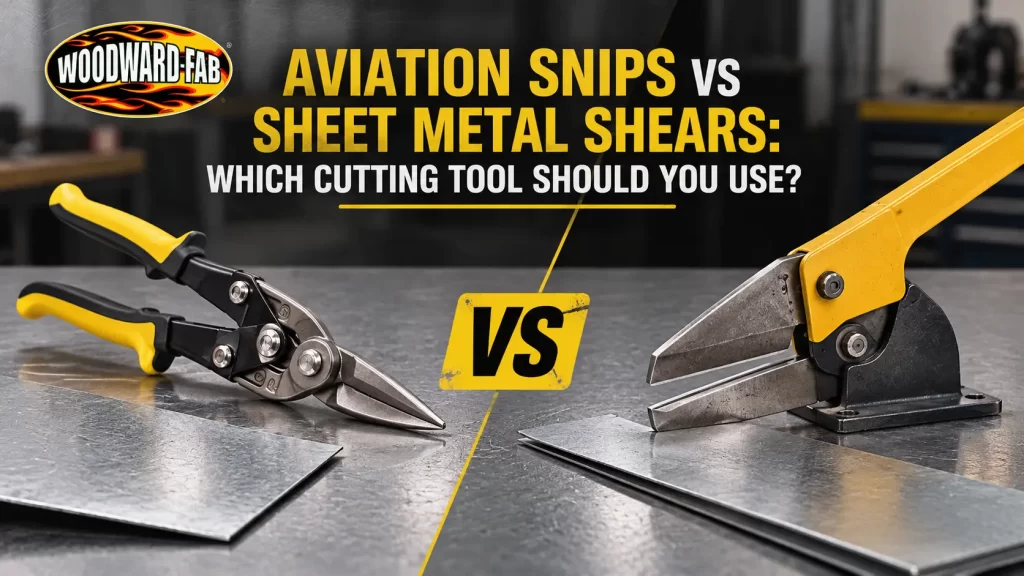
Aviation Snips vs Sheet Metal Shears

Aviation Snips vs Sheet Metal Shears: Which Cutting Tool Should You Use?

When you’re cutting sheet metal, the tool you choose can make a noticeable difference in the quality of the finished part. A small fabrication job may only require a pair of aviation snips, while larger sheets or repeated straight cuts may call for a dedicated sheet metal shear. So, which is better: aviation snips or sheet metal shears? The answer depends on what you’re cutting, the shape of the cut, material thickness, project volume, and the level of accuracy you need. Aviation snips are excellent for quick, detailed cuts and working around corners or curves. Sheet metal shears, particularly throatless and machine-style shears, are better suited for controlled, consistent cutting… Read More

Continue Reading
Sheet Metal Crack When Bending

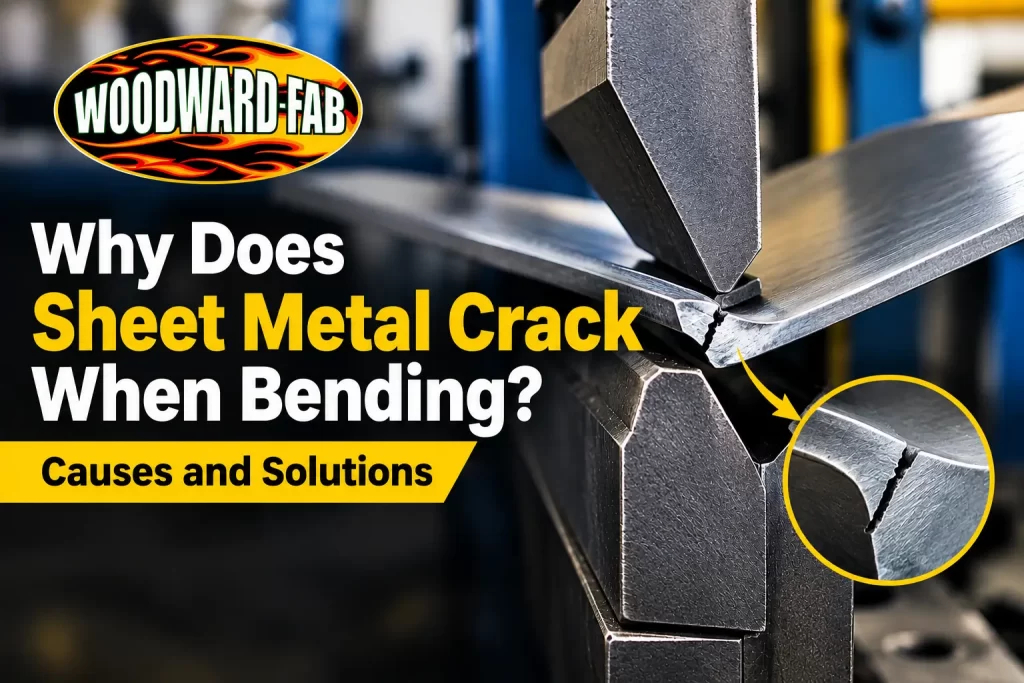
Why Does Sheet Metal Crack When Bending? Causes and Solutions

Sheet metal bending is a fundamental process in metal fabrication, used to create everything from automotive body panels and brackets to enclosures, ducts, structural components, and custom parts. However, one common problem can quickly turn a successful fabrication project into wasted material: sheet metal cracking during bending. If you have ever made a bend only to discover cracks forming along the bend line, you may wonder: Why does sheet metal crack when bending? The short answer is that cracking occurs when the metal is stretched beyond its ability to deform without breaking. Several factors can contribute to this problem, including an overly tight bend radius, material hardness, grain direction, work… Read More

Continue Reading
Automotive Body Panels With a Shrinker Stretcher

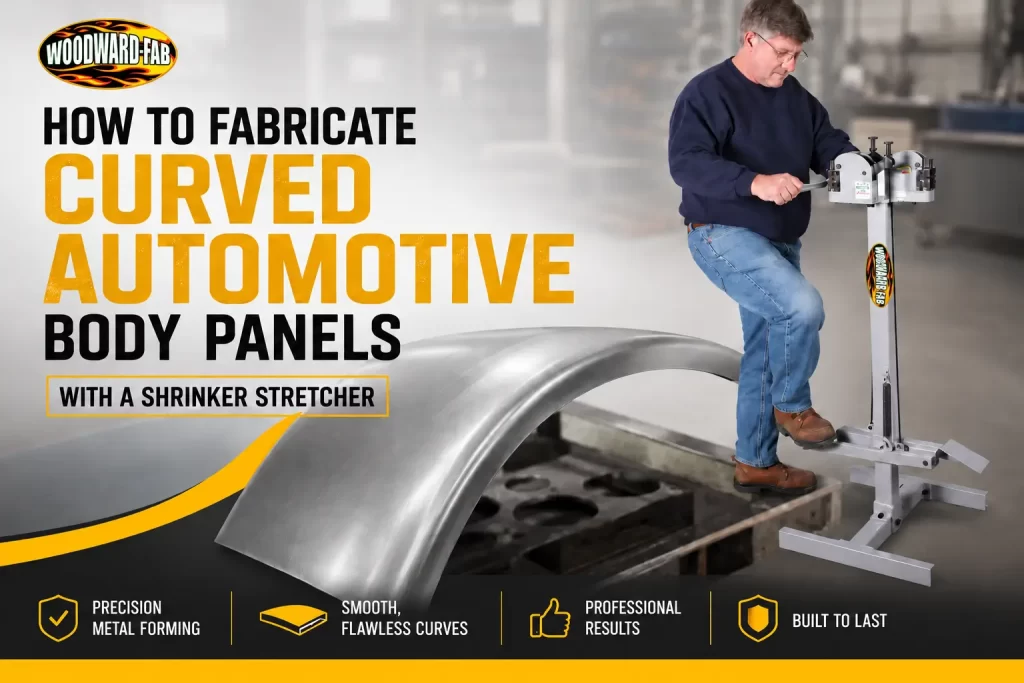
How to Fabricate Curved Automotive Body Panels With a Shrinker Stretcher

Creating a curved automotive body panel from a flat sheet of metal can seem difficult, especially when the panel needs to follow a wheel opening, windshield frame, fender contour, or other compound shape. A sheet metal shrinker stretcher makes this process more manageable by allowing a fabricator to control the shape of the metal through localized shrinking and stretching. The basic approach is simple: shrink the metal where you need an inside curve and stretch it where you need an outside curve. By gradually working different sections of the panel, you can turn a flat or partially bent piece of sheet metal into a controlled curved form without relying entirely… Read More

Continue Reading
Sheet Metal Cutting Tolerances

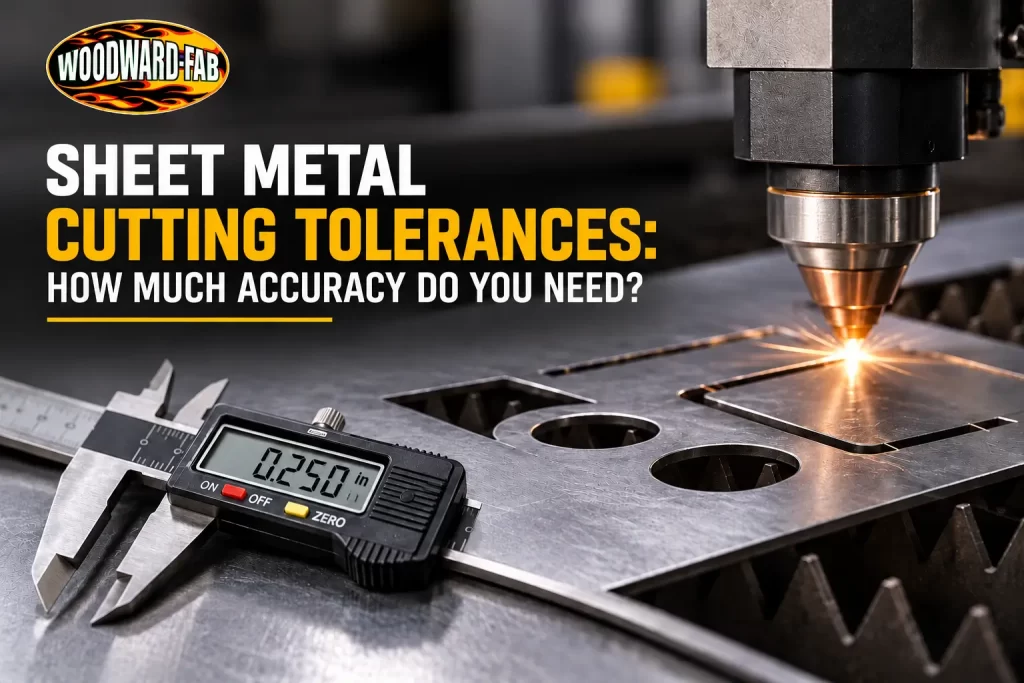
Sheet Metal Cutting Tolerances: How Much Accuracy Do You Need?

Sheet metal cutting tolerance is the acceptable variation between the specified dimension and the actual dimension of a cut part. The right tolerance depends on the material, thickness, cutting method, part geometry, equipment, and how the finished component will be used. Not every fabrication job requires extremely tight tolerances; the goal is to achieve the accuracy needed for the next operation without adding unnecessary cost or rework. Key Takeaways What Is Sheet Metal Cutting Tolerance? Sheet metal cutting tolerance is the amount of dimensional variation allowed between the intended size of a part and the size actually produced after cutting. For example, if a drawing specifies a 100 mm-wide component… Read More

Continue Reading
Manual vs Power Sheet Metal Tools

Manual vs Power Sheet Metal Tools: Which Is Better for a Small Fabrication Shop?

For a small fabrication shop, choosing the right equipment can have a major impact on productivity, operating costs, and finished product quality. While manual tools have long been a staple of sheet metal fabrication, power tools can significantly improve speed and efficiency when production demands increase. This raises an important question for shop owners: Are manual sheet metal tools or power sheet metal tools better for a small fabrication shop? The answer depends on your workload, material thickness, available budget, workspace, production volume, and the type of fabrication work you perform. Manual tools can provide excellent control and affordability for low-volume projects, while power tools can reduce physical effort and… Read More

Continue Reading
manual vs hydraulic press

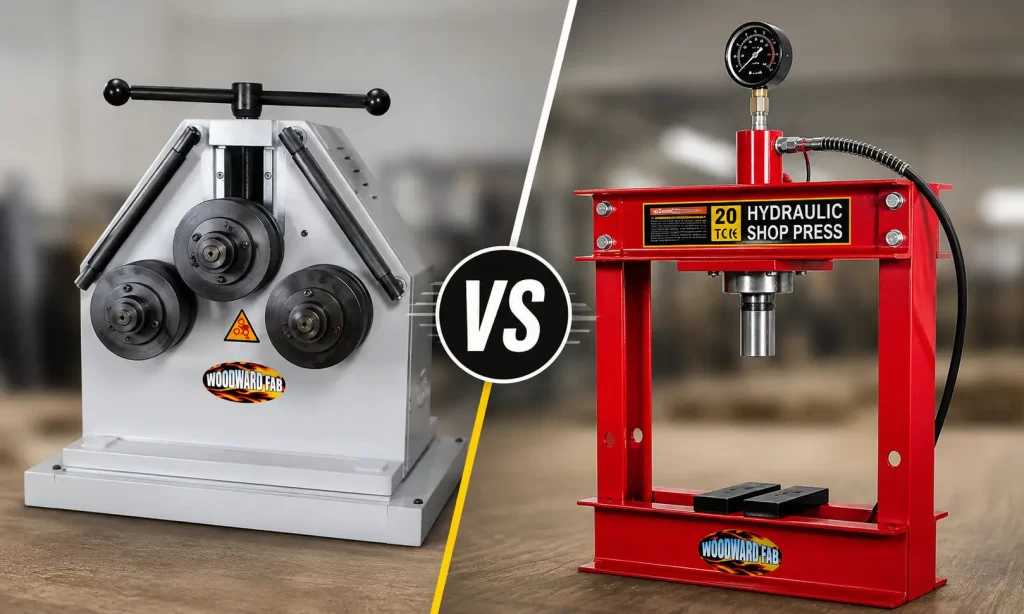
Manual vs Hydraulic Press: Which Metal Fabrication Press Do You Need?

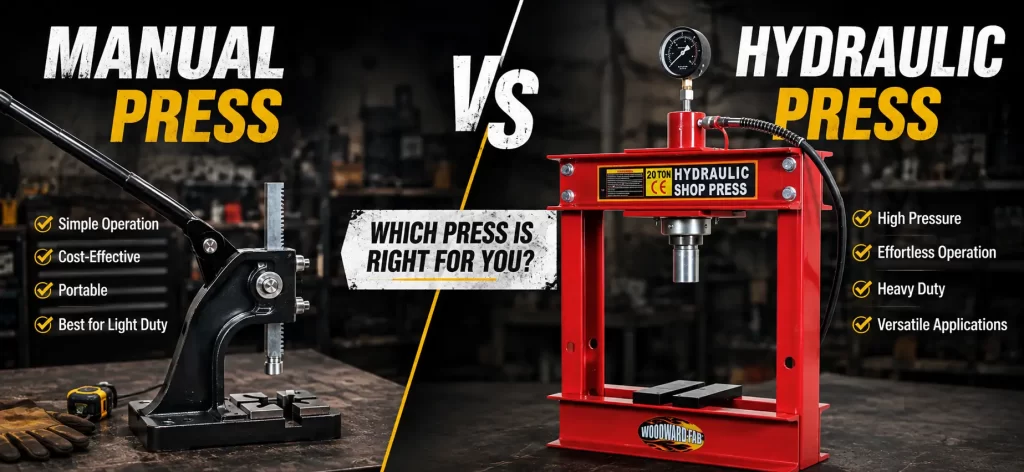
Choosing the right metal fabrication press can affect productivity, accuracy, operating costs, and the range of work a fabrication shop can handle. For many metalworkers, the decision comes down to a manual press or a hydraulic press. Understanding the difference between a manual vs hydraulic press can help you choose equipment that fits your workload instead of paying for capacity you may not need. A manual metal press and a hydraulic metal press can both perform useful fabrication and maintenance tasks, but they are designed for different workloads. A manual press machine may be ideal for occasional pressing, straightening, and lower-volume work, while a hydraulic press for metal fabrication can… Read More

Continue Reading
Beyond the price tag blog banner

Beyond Price Tags: Comparing Imported and American-Made Fabrication Tools

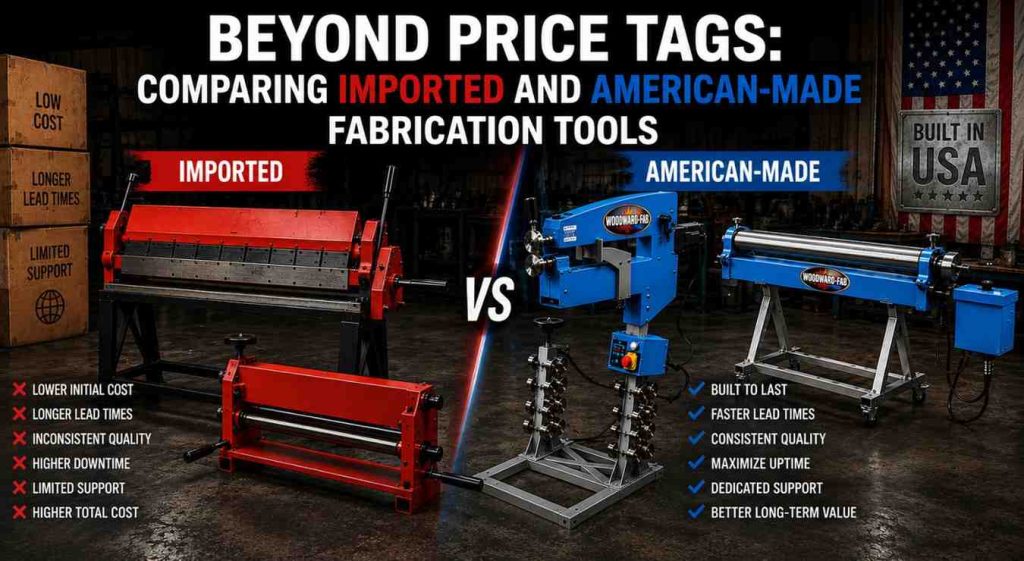
For automotive OEMs, restoration shops, race teams, and sheet metal fabricators, equipment quality is crucial as it directly affects not just daily production but also precision, delivery schedules, rework rates, efficiency, and above all customers’ trust. That is why many fabrication professionals pay close attention to where their tools are made. A low-cost machine may look appealing at first. However, after months of heavy use, the machine may start to vibrate excessively, leading to inconsistent bends and weak frames. This leads to production downtime, added costs, hard-to-find replacement parts, and delayed support. American-made fabrication tools continue to earn respect because they are built with consistency and long-term use in mind.… Read More

Continue Reading
Fabrication Equipment for Growing Shops

Ready-to-Ship Fabrication Equipment for Growing Shops: Scale Faster with In-Stock Machinery

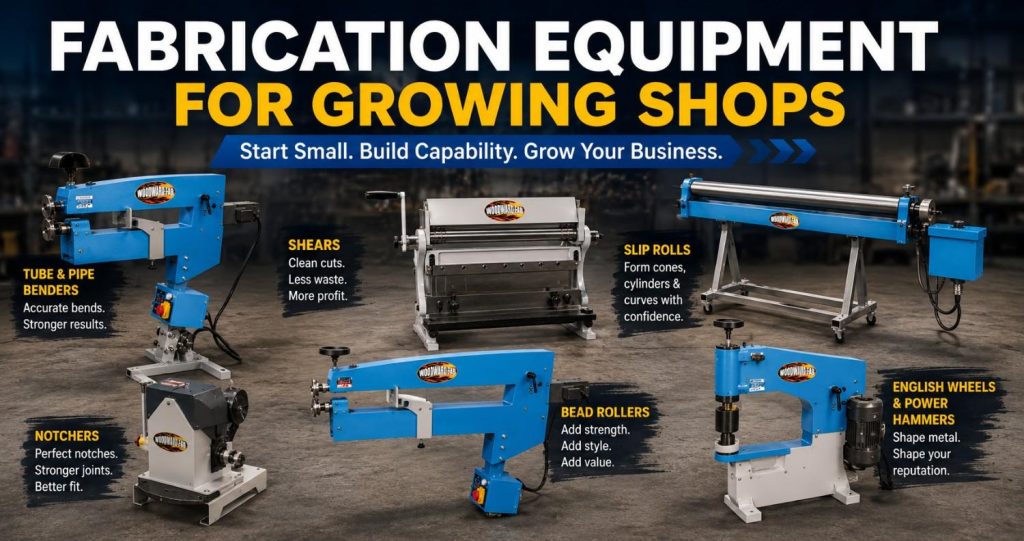
Fabrication shops expanding their production capabilities often require immediate access to dependable machinery to maintain workflow efficiency and meet increasing project demands. Delays in equipment availability can affect production schedules, customer commitments, and overall operational performance. Ready-to-ship fabrication equipment allows shops to add production capacity quickly while minimizing downtime associated with long procurement lead times. From sheet metal forming and tube bending to rolling, shaping, and welding support applications, in-stock metal fabrication tools help businesses improve productivity, streamline workflows, and respond faster to new fabrication opportunities. Fast shipping fabrication machinery also enables growing shops to scale operations without disrupting ongoing production activities. This post discusses the significance of ready-to-ship fabrication… Read More

Continue Reading
Why Downtime Costs Fabricators More Than Equipment Upgrades

Why Downtime Costs Fabricators More Than Equipment Upgrades

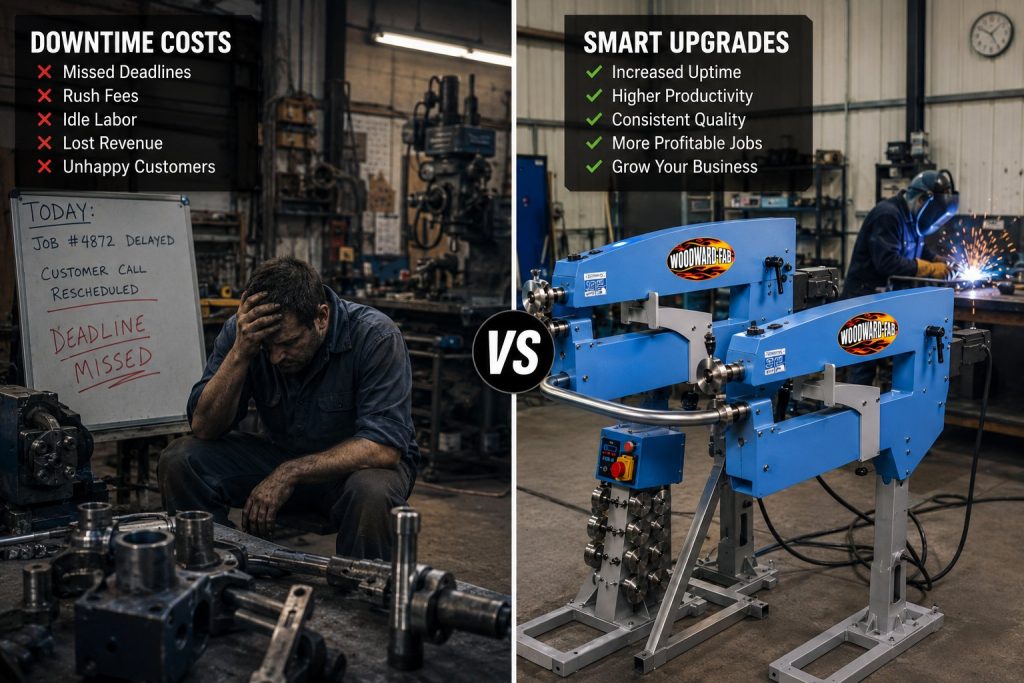
Fabrication shops depend on production consistency, delivery timelines, and machine reliability for steady business growth. A single machine failure can interrupt operations, delay shipments, increase labor costs, and reduce output. Many shop owners postpone equipment investments because replacement costs appear higher initially. However, fabrication downtime costs often exceed upgrade expenses over time. Lost production hours, missed deadlines, overtime labor, emergency repairs, and reduced customer confidence can quickly impact revenue and operational stability . Modern fabrication equipment helps shops improve efficiency, maintain reliable production schedules, and reduce costly disruptions.  This post explores the hidden costs of fabrication downtime, the risks of delaying equipment upgrades, and how modern fabrication equipment can improve… Read More

Continue Reading
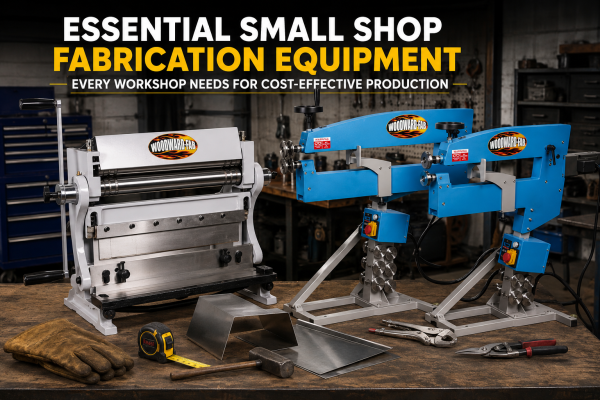
small shop fabrication equipment

Essential Small Shop Fabrication Equipment Every Workshop Needs for Cost-Effective Production

Small fabrication shops operate in a unique space within the manufacturing ecosystem. They often take on custom jobs, short production runs, repair work, and prototype builds, all while managing tight budgets and limited floor space. According to industry surveys from manufacturing associations in the U.S., small fabrication and job shops make up a significant share of local manufacturing businesses. However, they often face production expectations similar to larger facilities without having access to the same level of capital investment or infrastructure.. This makes the selection of affordable metal fabrication tools not just a purchasing decision, but a strategic investment that directly impacts long-term growth, productivity, and overall shop capability. The… Read More

Continue Reading
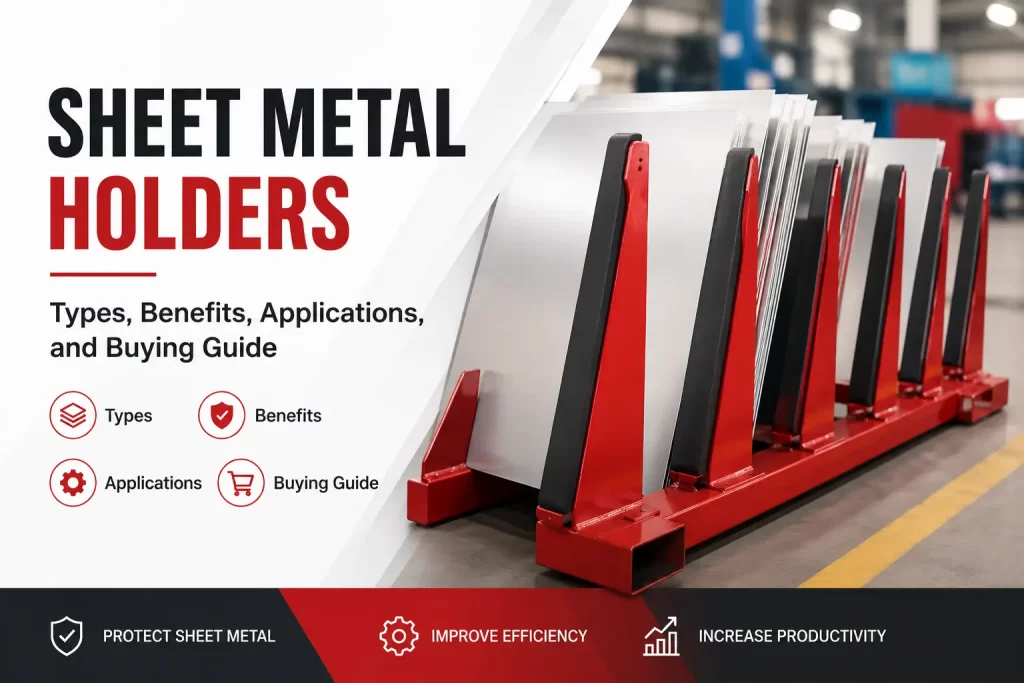
Sheet Metal Holders

Sheet Metal Holders: Types, Benefits, Applications, and Buying Guide

Sheet metal fabrication is vital across industries, requiring precision in cutting, bending, and shaping metal sheets. To achieve accurate and consistent results, specialized tools are necessary to secure the material and prevent unwanted movement during operations. Sheet metal holders are tools designed to securely hold metal sheets in place during fabrication. They provide stability, preventing movement and ensuring accuracy during operations like cutting, welding, and bending. These holders are essential for maintaining alignment and preventing shifts during the fabrication process. Understanding various types of sheet metal holders and their applications is essential for ensuring optimal precision and efficiency in fabrication processes. This guide highlights the types of sheet metal holders,… Read More

Continue Reading