
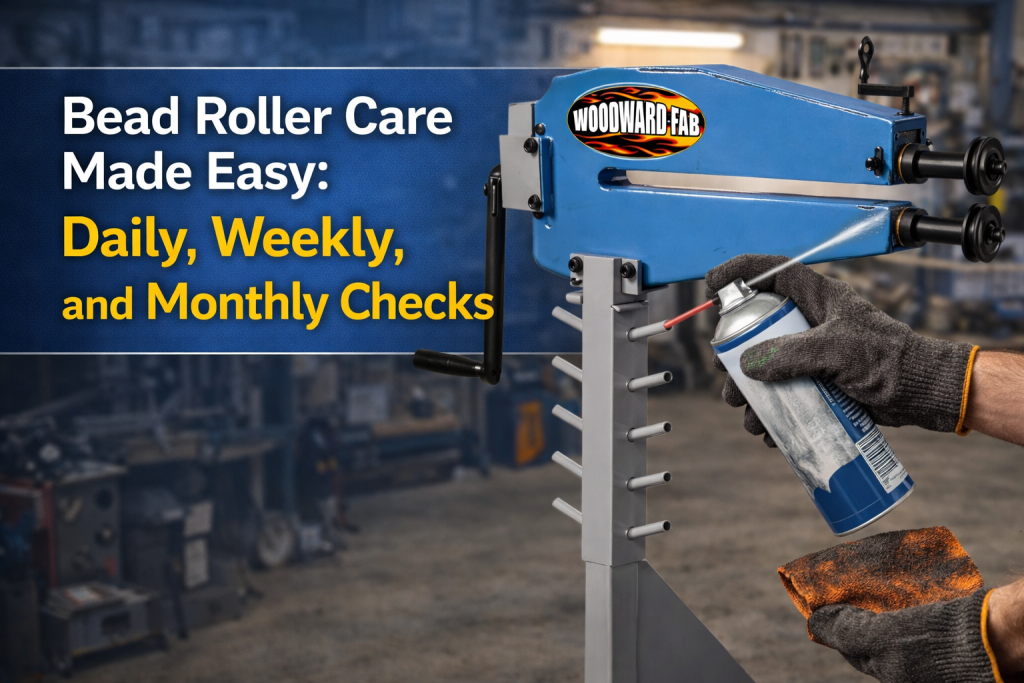
Bead rollers are one of the most versatile metalworking tools used for strengthening or shaping metal sheets and fabricating beads. These beads are widely used in automotive restoration, HVAC work, and custom metal fabrication, where accuracy and consistency are required. With continuous use, bread rollers are exposed to pressure, vibration, and metal dust, leading to wear, misalignment, and poor bead quality. To maintain smooth operation, regular inspection and maintenance are necessary. Proper care improves performance, ensures long-term reliability, and reduces the risk of unexpected faults. This post provides a bead roller maintenance checklist to ensure reliable operation and long-term durability.
Why Bead Roller Maintenance Matters
A bead roller operates under constant pressure. Each pass forces metal between hardened dies and transfers load directly to the shafts, bearings, gears, and frame. Without routine care, small alignment issues can degrade bead quality, leading to rework.
Regular inspection and proper upkeep provide several important benefits, including:
- Consistent bead quality: Clean, properly aligned rollers produce smooth, even beads without distortion, maintaining professional results on every panel.
- Extended tool life: Proper lubrication of gears, bearings, and moving parts reduces friction and wear, extending the service life of the bead roller.
- Improved operator control: A correctly adjusted bead roller turns evenly, holds pressure properly, and provides precise control over the workpiece.
- Reduced downtime: Routine checks identify loose parts, worn components, or alignment problems early, preventing unexpected breakdowns in the middle of a job.
- Enhanced safety: Tight hardware, properly fitted dies, and aligned shafts reduce the risk of sudden workpiece movement, ensuring safer operation.
Bead Roller Maintenance Checklist – A Complete Overview
Proper maintenance is essential to keep a bead roller operating smoothly, producing consistent beads, and extending tool life. The following checklist combines daily, weekly, and monthly tasks to simplify care and make maintenance easy to follow.
Daily Bead Roller Checks (Before Each Use):
- Roller alignment: Ensure the upper and lower dies line up precisely. Misalignment can cause uneven beads, panel damage, and extra stress on shafts and frame, accelerating wear.
- Die inspection: Check rollers for chips, dents, scratches, or buildup. Even minor defects can mar panels, reduce bead consistency, and increase tool strain. Replace or clean damaged dies to maintain accuracy.
- Clean tool surfaces: Remove dust, shavings, oil, and debris from shafts, dies, and frames. Dirt can enter bearings or pivot points, causing friction, wear, or noisy operation. A clean tool moves smoothly and lasts longer.
- Verify fasteners: Ensure bolts, covers, handles, and knobs are tight. Vibration can loosen hardware, leading to misalignment or unstable operation.
- Test crank or drive: Turn the handle or run the drive slowly. Grinding, slipping, or resistance indicate lubrication issues, misalignment, or worn components.
- Lubricate points: Apply light oil to exposed shafts, gears, and pivots. Proper lubrication reduces friction, ensures smooth operation, and prevents premature wear.
Weekly Bead Roller Checks
- Lubricate gears and bearings: Apply grease or oil to gear drives, bushings, and rotating parts. This reduces friction, ensures smooth movement, and extends tool life. Dry parts can cause uneven beads or extra load on the roller.
- Check frame alignment: Inspect the frame and shafts for straightness. Continuous pressure can pull the frame out of square, affecting bead precision and stressing bearings. Realignment preserves accuracy.
- Inspect drive components: Examine belts, chains, couplings, and motor connections for wear, cracks, or improper tension. Worn parts can cause speed variation, uneven beads, or damage. Replace immediately.
- Clean dies thoroughly: Remove shavings and debris from grooves. Build-up can distort bead shape, increase roller load, and accelerate wear.
- Check adjustment screws: Ensure pressure knobs and screws turn smoothly and stay in position. Slipping or stiff screws can produce inconsistent bead depth.
- Listen for unusual noise: Operate slowly and note clicking, grinding, or squeaking, which may indicate lubrication or alignment issues needing attention.
Monthly Bead Roller Checks
- Remove and clean dies: Take off the rollers for thorough cleaning. Inspect edges for chips, rounding, or uneven wear. Replace damaged dies to maintain bead precision and prevent stress on other components.
- Inspect shafts for play: Move each shaft by hand to check for looseness or side-to-side movement. Excessive play usually indicates worn bushings or bearings, which can cause uneven pressure and inconsistent beads.
- Check gear condition: Open gear covers and examine teeth for cracks, uneven wear, or damage. Worn gears can lead to uneven rotation, irregular bead depth, and increased mechanical stress.
- Verify mounting stability: Ensure the bead roller is securely fastened to its stand or workbench. Any movement during operation reduces accuracy, stresses the frame, and increases safety risks.
- Clean and oil adjustment threads: Remove debris from pressure screws and threaded adjustments, then apply light oil. Clean threads allow smooth, precise pressure control.
- Inspect electrical parts (powered models): Check switches, wiring, motor mounts, and connections for wear, looseness, or damage. Proper electrical condition ensures safe, reliable operation.
Common Bead Roller Problems & How to Fix Them
Even with proper maintenance, bead roller issues can occur. Most have simple causes if identified early.
- Uneven beads: Usually caused by misaligned dies or loose adjustment screws. Realign the rollers and tighten all hardware before continuing work.
- Machine hard to turn: Often caused by dry gears or dirty bearings. Clean the moving parts and apply proper lubrication to restore smooth operation.
- Rollers slipping on metal: This may happen when the pressure is too low or the dies are worn. Increase the tension gradually or replace the rollers if needed.
- Frame flexing during use: This can occur when working with thicker material or applying too much pressure. Check mounting bolts and reduce pressure to avoid stressing the frame.
- Noise during operation: Grinding or clicking sounds usually indicate gear wear or lack of lubrication. Inspect the gears and apply grease where required.
When to Replace Bead Roller Parts
Even with regular maintenance, some parts wear out over time. Knowing when to replace components keeps the bead roller accurate and prevents damage to the workpiece.
- Worn dies: Replace rollers when edges become rounded, chipped, or uneven. Worn dies leave marks on the metal.
- Loose bushings or bearings: If the shafts move side to side, new bushings or bearings are needed.
- Damaged gears: Broken or worn gear teeth cause rough operation and should be replaced.
- Bent shafts: A bent shaft makes alignment impossible and affects every bead.
- Cracked frame or mounts: Structural damage reduces accuracy and should be repaired before using the machine again.
Maintain Precision with Quality Bead Rollers
If you are looking for reliable bead rollers for a metalworking project, consulting a reliable player in the industry can help. Woodward Fab provides industry-grade bead rollers and precision sheet metal fabrication tools known for durability, accuracy, and reliable performance. For detailed specifications, accessory options, or guidance on selecting the right equipment, contact the Woodward Fab team at 1-800-391-5419 or email sales@woodwardfab.com.

Related Post: