
What is a Vise?
A vise is a crucial tool found in workshops and DIY projects. It consists of two jaws one fixed and the other adjustable operated by a screw mechanism. It securely holds objects in place, providing stability and precision during tasks like woodworking or metalworking. With its firm grip and versatility, a vise is an essential asset for any project requiring a reliable and steady hold.
A bench vise is an essential and integral tool used in metalworking, woodworking, and some other manufacturing applications. It is mounted on workbenches and its main function is to hold the workpiece safely and securely. It helps perform operations such as sawing and drilling with ease as the operator can use both their hands to perform the needed task. With such an important role, it becomes important that bench vise performs as expected. This is because even a small mistake may affect the production run or even cause an injury to the operator. Therefore, it is important to follow safety tips while using a bench vise. This post explores some effective and proven bench vise safety tips. Would you like to know what they are? Read on to know more.
What Are the Different Types of Vises?
- Bench Vise
Description: A bench vise is a sturdy and versatile tool mounted directly onto a workbench. It is equipped with two parallel jaws that are adjustable, allowing the user to securely hold various materials such as wood, metal, or plastic.
Uses: Ideal for general tasks such as cutting, drilling, filing, and sanding. Its design supports a wide range of applications, making it a staple in many workshops and garages.
Features:
- Fixed base that attaches to the workbench
- Adjustable jaws that can open and close to accommodate different material sizes
- Manual screw mechanism for tightening and loosening
- Pipe Vise
Description: Designed specifically for holding pipes and tubing, a pipe vise is built to secure cylindrical materials during pipe fitting or repair work. It is often used in plumbing and construction.
Uses: Essential for tasks involving pipes, such as cutting, threading, and joining. The vise provides a stable hold, making it easier to work with long or round materials.
Features:
- Specially shaped jaws or clamps that grip pipes firmly
- Adjustable to handle various pipe diameters
- Often includes features to rotate or position pipes for ease of access
- Machinist Vise
Description: A machinist vise is a high-precision tool used primarily in machining and metalworking. It is designed to hold workpieces securely with exceptional accuracy, ensuring precise cuts and measurements.
Uses: Commonly used in milling machines, drill presses, and other machinery that requires exact positioning of metal or other materials.
Features:
- High-quality construction for durability and precision
- Adjustable jaws with fine-tuning capabilities
- Often equipped with additional features like parallel jaws or V-blocks for specific tasks
- Swivel Vise
Description: A swivel vise features a base that can rotate, allowing the workpiece to be positioned at various angles. This versatility is beneficial for tasks that require adjustments or multiple angles of access.
Uses: Useful for projects that need angled or curved cuts and adjustments, such as automotive repair or metal fabrication.
Features:
- Swiveling base that locks into place at different angles
- Adjustable jaws similar to those of a bench vise
- Increased flexibility in positioning the workpiece for complex tasks
- C-Clamp Vise
Description: The C-clamp vise is a portable bench vise tool with a C-shaped clamp that can be quickly attached and removed from various surfaces. It is ideal for temporary setups where a permanent fixture is not practical.
Uses: Suitable for light-duty tasks and temporary clamping needs in woodworking, metalworking, or DIY projects.
Features:
- Portable design with a C-shaped clamp
- Adjustable screw mechanism for clamping different sizes of materials
- Quick setup and removal, making it convenient for on-the-go tasks
What is a Bench Vise Used for?
- A bench vise is a versatile tool used for securing objects during various tasks.
- It provides a stable grip, allowing for precise control and hands-free operation.
- The jaws, operated by a screw mechanism, can be adjusted to hold objects of different sizes and shapes.
- It is commonly found in workshops, garages, and construction sites.
- Mounting the bench vise to a workbench or sturdy surface ensures stability and prevents slippage during work.
- Ideal for cutting, drilling, filing, sanding, and assembling tasks.
- It offers enhanced efficiency and safety by securely holding work pieces.
- Woodworkers, metalworkers, mechanics, and DIY enthusiasts often rely on a bench vise.
- It allows for two-handed work and provides a convenient and reliable hold for various projects.
How Do I Choose the Right Vise for My Needs?
- Purpose: Determine if you need a bench vise, pipe vise, or another type based on your specific tasks.
- Size: Choose a vise with a jaw width and opening capacity suitable for the materials you work with.
- Material: Select a material that matches the durability and strength requirements for your applications.
- Mounting: Decide whether you need a stationary bench-mounted vise or a portable model.
How to Use a Bench Vise?
Mostly, bench vises are used for a wide assortment of work. Thus, it is important to select the appropriate vise depending upon its application. Here’s what you need to follow while using a bench vise safely.
- It is essential to cover your face and eyes using a shield and goggles, or safety glasses while using a bench vise.
- Ensure that the bench vise is attached securely to the work table while placing the bolts in the right order. Also, make sure the workbench or table is tightly secured to its base.
- A vise should be mounted in such a way that its stationary jaw projects slightly beyond the working bench. This will help the interference of long pieces. Simply, try to maintain a glance over the work surface and observe whether the worktable or other surfaces hold firm under duress.
- Do check the vise for damage, cracks, or other harms before attempting clamp to a workpiece in a vise.
- Keep the material and vise at a substantially compatible range to counteract vibration during operation such as sawing, documenting, and so on.
- Keep all the moving parts and strung oiled, spotless, and free of chips.
- Make use of jaw liners in a bench vise when there are chances of denoting the work.
What is the Function of a Vise in a Workshop?
In a workshop, the function of a vise is to securely hold a workpiece in place while various tasks are performed on it. This stability is crucial for precision and safety during operations such as cutting, drilling, sanding, or assembling materials. The vise’s jaws grip the material firmly, preventing it from shifting or moving, which allows for accurate and efficient work. By providing a stable and adjustable clamping surface, a vise helps ensure that the workpiece remains steady and aligned, reducing the risk of errors and improving the overall quality of the project. Whether used for woodworking, metalworking, or other applications, a vise is an essential tool for achieving precise results and maintaining safety in the workshop.
Bench Vice Applications:
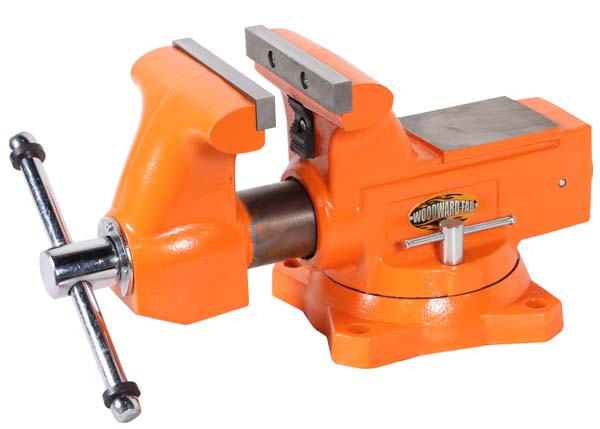
A bench vise is composed of several key parts, each contributing to its functionality and effectiveness. Here are the main parts of a bench vise:
- Jaws: The two primary clamping surfaces of the vise. The stationary jaw remains fixed to the base, while the movable jaw slides towards and away from the stationary jaw to grip materials securely. Jaws may have different surface textures or removable inserts to accommodate various materials.
- Base: The part of the vise that attaches it to the workbench or mounting surface. It provides stability and support, ensuring the vise remains securely in place during use.
- Screw Mechanism: The screw or spindle that moves the movable jaw towards or away from the stationary jaw. Turning the screw handle adjusts the clamping pressure and position of the movable jaw.
- Handle: Attached to the screw mechanism, the handle is used to turn the screw and adjust the distance between the jaws. It provides the mechanical advantage needed to apply clamping pressure.
- Sliding Mechanism: The system that allows the movable jaw to slide smoothly towards and away from the stationary jaw. It usually includes guide rails or slots to ensure precise movement.
- Anvil: A flat, often hardened surface located on the back or top of the vise. It is used for hammering or shaping materials and provides additional utility for tasks that require impact or force.
- Jaw Inserts: Removable or replaceable components that cover the jaws. Inserts can be made of different materials, such as rubber or steel, to protect the workpiece and provide better grip.
Things to Avoid When Using a Bench Vise
There are certain things that need to avoid when using a bench vise. The following are some useful pointers:
- Do not widen the jaws of a vise than what they have been designed for.
- Do not tighten the vise more than required.
- Never repair a bench vise by brazing or welding because it will compromise the warranty.
- Never use a handle expansion for extra clamping weight.
- Don’t use a vise with the smallest split.
- If there is a stress fracture, replace the part or the vise immediately.
With all the safety considerations, the quality of the bench vise makes a huge impact on the safety of employees. Thus, one must employ a reliable supplier like Woodward Fab for a high-quality purchase. The company has a wide inventory of cast iron bench vises that offer superior grip as well as brilliant results. Well-suited for almost all workbenches, these metalworking devices provide precision during each step of the process. Equipped with heavy-duty solid cast iron and German quality forged steel construction, the tool ensures a reliable function and precision clamping.

Related Post: