

Sheet metal manufacturing plays a crucial role in fulfilling the requirements of various engineering processes. When engineering specifications dictate the use of sheet metal, it undergoes a fabrication process. Sheet metal crafting encompasses a range of techniques including shearing, bending, notching, shrinking, and beading. Sheet metal fabrication tools are used specifically to form parts and components from sheet metal.
What is Sheet Metal Fabrication?
Sheet metal fabrication is a manufacturing process used to cut, bend, form, and assemble flat metal sheets into finished components or products.
Fabrication typically involves several processes including:
- Cutting
- Bending
- Rolling
- Beading
- Notching
- Welding
- Surface finishing
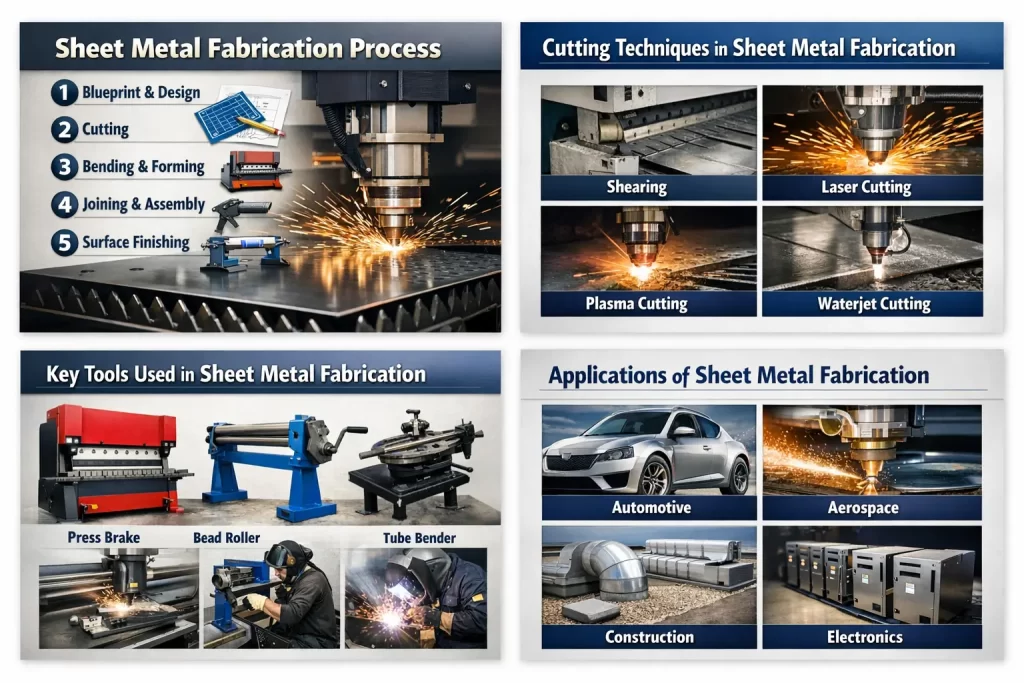
Fabricators use specialized tools such as bead rollers, press brakes, shears, tube benders, and welding equipment to shape metal sheets according to design specifications. This process allows manufacturers to produce high-strength, lightweight, and cost-efficient metal parts for various industries.
Step-by-Step Sheet Metal Fabrication Process
The following points outline the process undertaken when fabricating sheet metal:
1. Blueprint and Design Planning
In accordance with blueprints generated by the engineer, the sheet metal product specifications will be specified. Rough drawings will be made to understand the scope of the sheet metal fabrication process.
These blueprints include:
- Dimensions
- Material type
- Thickness
- Bending angles
- Assembly requirements
Proper planning ensures accuracy and minimizes material waste during production.
2. Finalizing Shop Drawings
Once all the details have been finalized, the final shop drawing will be made. Here, in-depth calculations are made to determine the levels of stress on the different parts of sheet metal. This analysis and calculation will determine the process to be followed in terms of fabrication.
These drawings help fabricators determine:
- Stress distribution on metal parts
- Required fabrication tools
- Bending allowances
- Manufacturing sequence
This stage is crucial for ensuring the product meets performance and durability standards.
3. Metal Cutting
Cutting is the first physical stage of the sheet metal fabrication process. Metal sheets are trimmed into required shapes using different cutting methods.
Common Cutting Techniques
Shearing
Shearing uses strong mechanical force to cut metal sheets.
Three common shear cutting operations include:
- Shearing: Cutting large sections of metal
- Punching: Creating holes in sheet metal
- Blanking: Cutting the outer perimeter of a part
Advanced Cutting Methods
Modern fabrication facilities use precision cutting technologies such as:
- Laser Cutting – Uses high-power lasers for extremely precise cuts
- Plasma Cutting – Ideal for cutting electrically conductive metals
- Water Jet Cutting – Uses high-pressure water without generating heat
These technologies improve cutting speed and accuracy.
4. Bending and Forming
After cutting, the metal sheet is shaped using bending and forming techniques.
Common tools used include:
- Press brakes
- Sheet metal brakes
- Roll forming machines
- Bead rollers
These machines help create different shapes such as:
- V-bends
- U-bends
- Channels
- Complex formed structures
Precision forming ensures that parts meet the required structural and functional specifications.
5. Surface Finishing
Once fabrication is complete, finishing processes are applied to improve the appearance and durability of the product.
Common finishing treatments include:
- Powder coating
- Paint coating
- Polishing
- Anodizing
- Silk screening
Surface finishing enhances:
- Corrosion resistance
- Electrical conductivity
- Surface durability
- Aesthetic appeal
Introduction to the Metal Sheet Fabrication Process
Sheet Metal Crafting comprises several processes and tools depending on the application it serves. All these processes and tools are utilized with a common goal of converting metal sheets into workable items. Here, we will discuss the basic types of metal sheet fabrication techniques in any industry.
Cutting
Rolled metal sheets are used for sheet fabrication. These sheets are rectangular and flat. Therefore, the first step of any sheet fabrication is cutting. In this process, a metal sheet is cut or removed by applying a strong force. Also, the sheet metal cutting process is performed using a variety of basic to advanced cutting tools. For instance, shearing is the common method of cutting a metal sheet. However, advanced laser machines are used to cut special alloys, hard materials, and precious metals.
Cutting with Shear
When shear forces are applied to cut the material, the process is referred to as the shearing process. There are three basic cutting operations involved in shear cutting:
- Shearing: Cutting large parts.
- Punching: Making holes in the metal sheet.
- Blanking: Cutting part perimeters out of the sheet metal.
Cutting without Shear
This type of cutting is employed for industrial metal fabrication projects, which demand high precision, and fast processing times.
- Laser Beam Cutting: High-powered laser beams are used to cut the metal.
- Plasma Cutting: This method involves directing accelerated plasma beams at the metal sheet. It is ideal for cutting electrically conductive metal sheets.
- Water jet Cutting: Water jet machines are also used to cut metal sheets. No heat is produced in this method.
Bending and Forming
The next step in metal sheet fabrication is bending and forming. Various types of tools such as press brakes are used for creating V-bends, U-bends, and custom forms as required by the project. Sheet metal machining, folding, and stamping are ways to form or bend a metal sheet. However, elastomer and rotary bending are used to produce new shapes with delicate and finished metal sheets.
Joining
In many projects, a part is formed from various metal sheets. These metal sheets are fused together by welding, brazing, riveting, and adhesives.
Finishing
Once the metal sheet is cut, bent, and formed into a desired shape, the surface finish is made with powder and paint coatings, silk screening, and other custom surface treatments. Various automated surface finishing treatments are designed to enhance the unique properties of metal sheets such as conductivity, resistance, etc.
Applications of Sheet Metal Fabrication
Precision Sheet Metal Work finds applications in a multitude of industries. Here are a few examples:
Automotive Industry
- Body panels
- Chassis components
- Exhaust systems
Aerospace Industry
- Aircraft wings
- Structural frames
- Engine components
Construction Industry
- Roofing panels
- HVAC ductwork
- Structural supports
Electronics Industry
- Metal enclosures
- Cabinets
- Heat sinks
Advantages of Sheet Metal Manufacturing
The process offers several advantages:
High Customization
Sheet metal can be easily fabricated into custom shapes and sizes.
Durability
Metal components provide excellent strength and long-term reliability.
Cost-Effective Manufacturing
Sheet metal fabrication allows efficient production for both small and large batches.
Versatility
Different metals such as aluminum, steel, copper, and brass can be fabricated for diverse applications.
Frequently Asked Questions
What materials are commonly used in sheet metal fabrication?
Common materials include:
- Stainless steel
- Aluminum
- Carbon steel
- Copper
- Brass
Each material is selected based on strength, corrosion resistance, and application requirements.
What tools are used in sheet metal fabrication?
Common fabrication tools include:
Welding tables
Bead rollers
Press brakes
Shears
English wheels
Tube benders
What industries use sheet metal fabrication?
Sheet metal fabrication is widely used in automotive, aerospace, construction, electronics, HVAC, and industrial equipment manufacturing.
For more information on your sheet metal fabrication processes, you can contact the Woodward-Fab team today!
Feel free to share this blog post on social media to spread knowledge and help others discover the wonders of metal Fabrication. Together, let’s celebrate the ingenuity and craftsmanship behind this remarkable process.

Related Post:
- Why American Fabricators Trust Industrial-Grade Equipment
- Transforming Industries with Metalworking Tools: From High-Performance Parts to Artistic Creations
- DIY Metal Sheet Bending Equipment for Metalworking
- How the Right Supplier Partnership Can Revolutionize Your Manufacturing Process
- Tool Mastery: How Expertise with Your Equipment Impacts Sheet Metal Results