
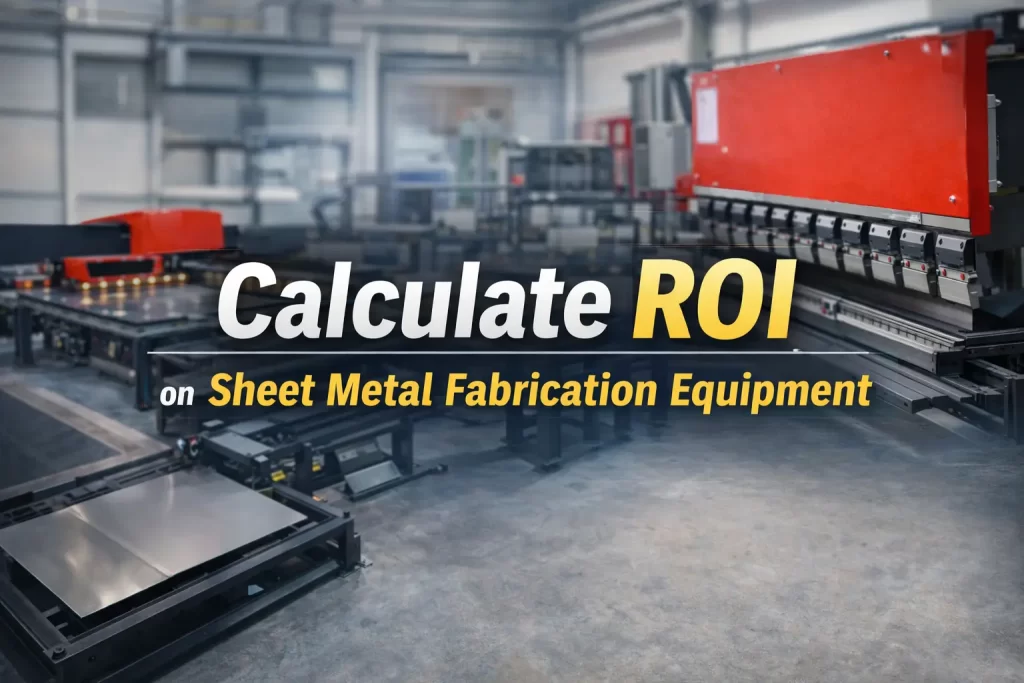
Investing in sheet metal fabrication equipment such as press brakes, bead rollers, shears, and slip rolls is a major decision for fabrication shops. Understanding the return on investment (ROI) helps manufacturers determine whether a machine upgrade will improve productivity, reduce scrap, and increase profits.
The real question business owners and plant managers ask is:
“Will this new fabrication machine actually increase my profits?”
This is where Return on Investment (ROI) becomes essential. ROI helps fabrication shops, OEM suppliers, and industrial manufacturers understand whether upgrading equipment is a smart financial move or an unnecessary expense.
What ROI Means in Sheet Metal Fabrication?
ROI in fabrication is not just about selling more products. It also includes:
- Faster bending, cutting, and rolling speeds
- Reduced scrap material
- Improved dimensional accuracy
- Lower labor costs
- Reduced machine downtime
- Energy efficiency
- Higher customer satisfaction due to quality consistency
A simple explanation of ROI fundamentals can be found here:
https://www.investopedia.com/terms/r/returnoninvestment.asp
Basic ROI Formula for Fabrication Equipment
ROI (%) = (Annual Net Gain – Investment Cost) / Investment Cost × 100
However, fabrication ROI should include both direct and indirect benefits, not just revenue.
Step 1 – Calculate Total Investment Cost
Many workshops only consider the machine price, which leads to inaccurate ROI. Include:
- Machine purchase price
- Shipping and installation
- Tooling and dies
- Operator training
- Electrical upgrades
- Maintenance contracts
- Software licenses (for CNC machines)
- Downtime during installation
A realistic cost calculation prevents over-optimistic ROI projections.
Step 2 – Identify Annual Financial Benefits
1. Increased Production Output
New fabrication machines often operate at higher speeds with better precision.
For example, a hydraulic press brake with digital controls can double bending speed compared to manual equipment.
2. Reduced Material Waste
Accurate cutting and bending reduce scrap metal.
Even a 5-10% material saving can significantly increase yearly profits.
3. Labor Efficiency
Automation or faster cycles may reduce:
- Overtime wages
- Number of operators per machine
- Rework hours
4. Reduced Downtime & Maintenance
Older fabrication tools often require frequent repairs. New machines offer:
- Warranty coverage
- Better durability
- Predictive maintenance features
5. Energy Savings
Modern fabrication equipment consumes less power, especially CNC and servo-driven machines.
Step 3 – Calculate Net Annual Gain
Net Annual Gain = Total Annual Savings + Increased Revenue – Annual Operating Costs
Step 4 – Estimate Payback Period
Payback Period = Total Investment ÷ Annual Net Gain
Most small sheet metal workshops or DIY fabricators usually achieve 3-6 months payback, depending on usage frequency.
Common ROI Mistakes Fabricators Make
Investment: $500 Press Brake
Annual Benefits:
Faster Production: $1,200
Reduced Scrap: $300
Labor / Time Savings: $800
Maintenance Reduction: $200
Total Annual Gain = $2,500
Payback Period 0.2 Years (Around 2-3 Months)
After this, the machine starts generating pure profit, especially for workshops that use the press brake regularly for small batch or custom bending jobs.
Non-Financial Benefits That Still Matter
Even when ROI numbers are similar, upgraded fabrication tools provide:
- Better edge quality and finishing
- Ability to accept larger or complex orders
- Improved workshop safety
- Enhanced brand reputation
- Higher resale value of finished products
Common ROI Mistakes Fabricators Make:
- Ignoring tooling and die costs
- Underestimating training time
- Overestimating productivity improvements
- Not calculating scrap reduction
- Forgetting electricity costs
FAQ: ROI on Fabrication Equipment
How do you calculate ROI on sheet metal equipment?
ROI is calculated using the formula:
Return on Investment = (Net Profit – Investment Cost) ÷ Investment Cost × 100
This helps fabrication shops determine whether equipment upgrades will improve profitability.
How long does fabrication equipment take to pay for itself?
Most small fabrication machines achieve payback within 6 months to 2 years, depending on production volume and scrap reduction.
What factors impact ROI in sheet metal fabrication?
Key factors include:
Maintenance costs
Production speed
Material waste reduction
Labor efficiency
Energy consumption
Final Takeaway:
Upgrading sheet metal fabrication equipment should never be an emotional decision – it should be a calculated business move. When you evaluate ROI correctly, you gain clarity on:
- Profitability
- Operational efficiency
- Competitive advantage
- Long-term sustainability
A well-planned equipment upgrade doesn’t just improve your workshop, it transforms your business into a more scalable, reliable, and profitable operation.

Related Post: