
Metalworking demands precision, speed, and the right equipment, especially when it comes to cutting sheet metal. Whether you’re fabricating automotive panels, HVAC ducting, roofing components, or custom metalwork, selecting the right cutting tool can dramatically improve efficiency and final product quality.
Among the most commonly compared sheet metal cutting tools are nibbler tools and metal shears. Understanding the key differences between shears vs nibbler tools helps fabricators, contractors, and DIY professionals choose the best solution for their specific cutting needs.
This guide breaks down the advantages, limitations, and ideal applications of metal nibblers, air tool nibblers, and sheet metal shears so you can make an informed decision.
What is a Nibbler Tool?
A metal nibbler is a specialized cutting tool designed to remove small sections of sheet metal in rapid succession, allowing users to create highly detailed cuts with minimal distortion.
Key Benefits of a Nibbler Tool:
- Excellent for curves, circles, and intricate patterns
- Ideal for internal cutouts and notches
- Cuts without warping surrounding material
- Produces clean edges
- Works well on corrugated or irregular surfaces
- Easy maneuverability in tight spaces
Common Applications:
- HVAC ductwork
- Automotive fabrication
- Metal roofing
- Custom panel fabrication
- Prototype work
Sheet metal cutter nibblers are especially valuable when complex designs or irregular shapes are required.
What is a shear tool?
A metal shear uses opposing blades to apply direct cutting force along a straight path. Shears are designed primarily for long, straight cuts and high-speed production.
Key Benefits of Shears:
- Fast cutting speed
- Straight, repeatable cuts
- Less waste material
- Cleaner work area
- Suitable for heavy-duty cutting
- Ideal for thicker metals
Common Applications:
- Industrial fabrication
- Sheet metal trimming
- Straight panel cuts
- Production work
- Construction and roofing
Shears are often preferred for larger-scale cutting jobs where speed and consistency are critical.
Make the Right Choice between Nibblers and Shears
Although the most established and popular cutting tools, many of us are still not aware of the major distinction between nibblers and shears. In order to make the right choice, you must first know about the tools first. Let us see a brief description of nibblers and shears.
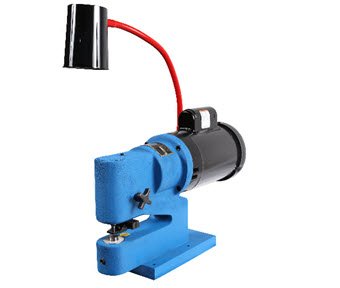
- Nibblers: Available in freehand use or bench-mounted versions, these versatile cutting tools help cut through sheet metal precisely without damaging the workpiece. These handiest and universal cutting devices work without feed force, distortion, emissions, or spark. These cutting tools are widely chosen to make cut sections, small channels or cutouts, tubes, and corrugated or trapezoidal sheets. The tool can cut a wide range of steel materials in varying thicknesses by allowing for easy and quick direction change.
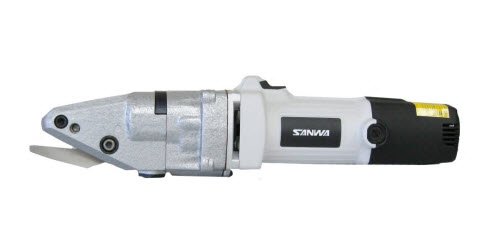
- Shears: Shears, which help cut slight curves and straight cuts, are used for cutting aluminum, brass, copper, lead, and other materials. With long-lasting durability and dependability, these sheet metal cutting tools make repeatable cuts, whilst reducing waste. They are compact and are designed to provide faster and less fatigue cutting. Available in either pneumatic- or electric-powered versions, shears are known for their highest speed, optimum performance, and efficiency.
Nibbler vs Shears: Major Differences
Although both nibblers and shears are meant to perform the same cutting action, there are a few differences between the two. Let us have a look at some.
- Nibblers are not an ideal choice when it comes to cutting extremely fine lines. However, the same can be accomplished with the help of hand shears.
- Unlike shears, nibblers are widely chosen to cut patterns out of sheet metal.
- Shearing action creates less waste compared to nibbling, which produces thousands of tiny chips.
- The shearing tool is suitable for heavy-duty cutting tasks compared to nibblers.
- As the shearing tool creates less waste, it is much easier to clean the space after the cutting unlike the nibbling operation, which produces chips everywhere.
- Shears cut with minimum distortion, unlike nibblers that destroy the material in their path.
- Great for prototyping and small production, nibblers are easy to operate in difficult-to-access areas, unlike shears.
- Shears easily cut through 14-gauge mild steel and stainless to 18-gauge quickly and quietly without warping or bending.
| Nibbler | Shear |
| Cuts intricate shapes | Cuts straight lines |
| Ideal for curves and notches | Suitable for straight cuts |
| Shearing action | Pressing action |
| Thinner cutting width | Wider cutting width |
| Slower cutting speed | Faster cutting speed |
| Suitable for thin materials | Suitable for thicker materials |
| Requires less force | Requires more force |
| Versatile for detailed work | Efficient for bulk cutting |
| Often handheld | It can be handheld or bench-mounted |
With this information, you must be able to make a wise selection between the two for cutting sheet metal to the required specifications. However, besides the information provided, there is much more technical information you must know about these cutting tools. Collaborating with a trusted sheet metal tool manufacturing and distributing company will surely help you in this regard. The post ends by letting you know about such a manufacturer, Woodward Fab, who keeps a large inventory of both nibblers and shearing tools. They not only offer high-quality cutting tools that work impressively for cutting a wide range of materials with varying thicknesses but also offer unbeatable customer assistance to help know the product better.

Related Post:
- Metalworking Tool Selection Guide: Match the Tool to the Fabrication Task
- Aviation Snips vs Sheet Metal Shears: Which Cutting Tool Should You Use?
- How to Fabricate Curved Automotive Body Panels With a Shrinker Stretcher
- Sheet Metal Cutting Tolerances: How Much Accuracy Do You Need?
- How to Repair Rusted Car Panels