
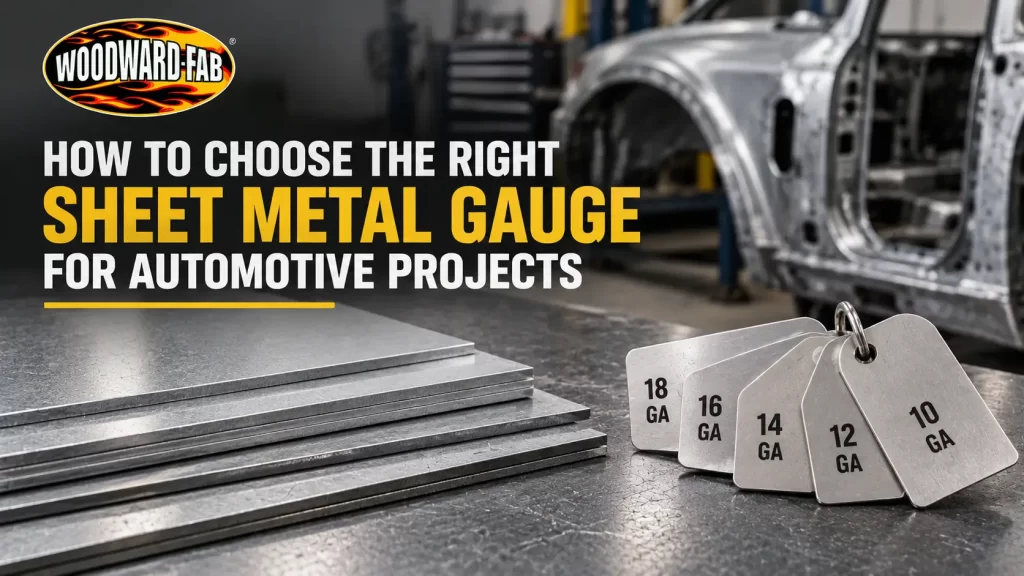
Choosing the right sheet metal gauge for automotive projects is one of the most important decisions a fabricator makes. The thickness of the metal affects strength, weight, flexibility, weldability, forming performance, durability, and the final appearance of the vehicle.
Whether you’re restoring a classic car, fabricating custom body panels, repairing rust damage, or building components for a race car, using the wrong sheet metal thickness can make fabrication unnecessarily difficult. Metal that is too thin may distort or crack, while metal that is too thick can be difficult to form and add unnecessary weight.
So, what gauge sheet metal should you use for automotive work? The answer depends on the application, material, forming method, and performance requirements.
What Does Sheet Metal Gauge Mean?
Sheet metal gauge is a traditional measurement system used to describe the thickness of metal. In general, a higher gauge number means thinner sheet metal, while a lower gauge number means thicker material.
For example, 18-gauge steel is thicker than 20-gauge steel.
However, gauge measurements can vary depending on the material. Steel, stainless steel, and aluminum do not necessarily use identical gauge-to-thickness conversions. For accurate fabrication, always check the actual thickness in inches or millimeters rather than relying only on the gauge number.
For automotive fabrication, commonly used sheet metal thicknesses can fall roughly within the 0.5 mm to 3.0 mm range, depending on whether the component is a body panel, reinforcement, bracket, structural component, or other vehicle part.
Common Automotive Sheet Metal Gauges
There is no universal automotive sheet metal gauge that works for every project. However, the following ranges can serve as a practical starting point for custom fabrication and restoration work.
| Gauge | Approx. Steel Thickness | Typical Automotive Use |
|---|---|---|
| 20 gauge | 0.036 in / 0.91 mm | Light body panels and repair sections |
| 18 gauge | 0.048 in / 1.22 mm | Body panels, floor sections, general fabrication |
| 16 gauge | 0.060 in / 1.52 mm | Reinforcements, brackets, heavier panels |
| 14 gauge | 0.075 in / 1.90 mm | Structural brackets and heavier-duty components |
| 12 gauge | 0.105 in / 2.66 mm | Heavy brackets and structural applications |
These are general reference points rather than rules. The original vehicle construction, material grade, required strength, and fabrication method should always be considered before selecting replacement material.
How to Choose the Right Gauge for Automotive Body Panels
For automotive body panels, formability is usually more important than simply choosing the thickest material available.
Fenders, quarter panels, doors, hoods, roof sections, and other exterior panels often contain compound curves. The sheet needs to stretch, shrink, bend, or otherwise move into shape without excessive cracking or distortion.
For restoration work, one of the best approaches is to measure the original panel whenever possible. Matching the approximate thickness and material characteristics of the original component can make forming and welding easier.
Woodward Fab’s guide to [fabricating curved automotive body panels Woodward Fab: Curved Automotive Body Panels explains why material thickness and formability matter when creating replacement panels.
Thin Sheet Metal
Thin sheet metal is easier to manipulate and can be useful for certain body panels and repair sections. However, it has a greater tendency to:
- Warp during welding
- Dent easily
- Stretch during forming
- Develop oil-canning
- Distort from excessive heat
If you’re working with thin material, controlling heat input and using the correct forming technique becomes especially important.
Medium-Gauge Sheet Metal
Medium-gauge material provides a useful balance between formability and rigidity. It is often a practical choice for many custom automotive fabrication projects, including floor sections, repair panels, brackets, and general body fabrication.
For many restoration projects, this range offers enough rigidity without becoming excessively difficult to shape.
Heavy-Gauge Sheet Metal
Thicker material is appropriate when strength and rigidity are priorities. It may be used for brackets, structural reinforcements, mounting components, chassis-related fabrication, and other areas that experience higher loads.
However, thicker metal requires more force to bend and form. Your equipment must be rated for the material thickness and type.
Does Material Type Affect Gauge Selection?
Yes. Gauge alone does not tell you whether a sheet is appropriate for an automotive application.
Steel and aluminum behave differently during forming, bending, welding, and shaping. Two materials with similar thicknesses can respond very differently to the same fabrication process.
Steel is widely used in automotive applications because of its strength, availability, weldability, and cost effectiveness. Aluminum is increasingly used where weight reduction is important. High-strength and advanced high-strength steels can provide increased strength at reduced thicknesses compared with conventional steels.
Before choosing material, consider:
- Material grade
- Actual thickness
- Strength requirements
- Ductility
- Corrosion resistance
- Welding requirements
- Forming method
- Original vehicle specifications
This is especially important when repairing structural or safety-related components.
Match Sheet Metal Gauge to Your Fabrication Process
The equipment you use also influences which gauge you can work with efficiently.
For example, a thin automotive panel may be shaped using hand tools, hammers, dollies, an English wheel, or a shrinker/stretcher. Thicker material may require a press brake, hydraulic equipment, or heavier-duty forming machinery.
If you’re planning to cut, bend, form, and finish automotive sheet metal regularly, explore [Woodward Fab’s sheet metal fabrication equipment]Woodward Fab Sheet Metal Fabrication Equipment to match equipment capabilities with your material and production requirements.
Woodward Fab’s equipment selection guidance emphasizes considering material thickness, material type, required precision, production volume, tooling, workspace, and future requirements when selecting fabrication equipment.
Gauge Selection for Different Automotive Projects
A practical way to select sheet metal gauge is to start with the job rather than the material.
Automotive Body Repair
For replacement body panels and rust repair, match the original panel thickness as closely as practical. This helps maintain similar forming and welding characteristics.
Floor Pans
Floor pans generally need more rigidity than cosmetic exterior panels. Select material based on the original construction, required stiffness, and available forming equipment.
Custom Brackets
Brackets carrying mechanical loads usually require thicker material than decorative panels. Consider the load, mounting method, bend geometry, and fastener requirements.
Race Car Fabrication
Race car projects require careful consideration of weight, stiffness, and safety. Do not select a gauge based solely on ease of fabrication. Structural components should follow the vehicle’s engineering requirements and applicable racing regulations.
Classic Car Restoration
Restoration work benefits from matching the original material as closely as possible. Thickness, shape, forming characteristics, and weldability all affect how naturally the replacement panel integrates with the vehicle.
Common Mistakes When Choosing Automotive Sheet Metal Gauge
Choosing the Thickest Material
Thicker is not automatically better. Excess thickness can increase vehicle weight and make forming more difficult.
Choosing Material Only by Gauge
Gauge does not tell the whole story. Material grade and mechanical properties also matter.
Ignoring Formability
A material may be strong but difficult to shape into a complex automotive panel. Always consider how much stretching and shrinking will be required.
Forgetting Welding Distortion
Thin panels can warp significantly during welding. Plan the welding sequence and control heat input.
Not Checking Tool Capacity
Before bending or forming a particular sheet, verify that your machine and tooling are designed for its material and thickness.
For more guidance, see Woodward Fab’s article on [why sheet metal bends can become inconsistent]Woodward Fab: Consistent Sheet Metal Bending.
A Simple Formula for Choosing the Right Gauge
When you’re unsure what gauge to use, work through these five questions:
1. What component am I making?
Body panel, floor pan, bracket, reinforcement, or structural component?
2. What was the original thickness?
For restoration work, measuring the original panel is an excellent starting point.
3. How much forming is required?
Complex curves generally require material with suitable formability.
4. How will I fabricate it?
Consider your shear, brake, bead roller, shrinker/stretcher, press, or other equipment.
5. What strength does the finished component require?
Choose material based on actual performance requirements rather than thickness alone.
Final Thoughts
Choosing the right sheet metal gauge for automotive projects is a balance between strength, weight, formability, durability, and fabrication practicality. The ideal thickness depends on what you’re building, what material you’re using, how the part will be formed, and what loads it needs to withstand.
For automotive restoration and custom fabrication, start by understanding the original component, measure its thickness where possible, and select a material that provides comparable performance. For structural components, always follow the vehicle manufacturer’s specifications or appropriate engineering requirements.
The right material becomes even more useful when paired with the right fabrication equipment. From cutting and bending to forming and finishing, Woodward Fab provides sheet metal fabrication tools and equipment designed to help automotive fabricators achieve accurate, repeatable results.
Explore [Woodward Fab’s sheet metal fabrication solutions Woodward Fab Sheet Metal Fabrication Equipment to find equipment suited to your automotive fabrication requirements.
Frequently Asked Questions
What is the best gauge sheet metal for automotive body panels?
There is no single best gauge. The appropriate thickness depends on the original vehicle panel, material type, required formability, and intended application. For restoration work, matching the original panel thickness is generally a good starting point.
Is 18-gauge sheet metal good for automotive fabrication?
18-gauge steel can be useful for many automotive fabrication applications, including body panels, repair sections, and general fabrication. However, the appropriate choice depends on the specific vehicle component and its strength requirements.
Is thicker sheet metal stronger?
Generally, increasing thickness can increase a component’s rigidity and load capacity, but strength also depends on the material grade, geometry, forming method, and design. Thicker is not automatically the best choice for every automotive project.
Should I use steel or aluminum for automotive sheet metal?
Steel offers strength, availability, weldability, and cost advantages, while aluminum can provide weight savings. The best material depends on the vehicle, application, forming requirements, and desired performance.
Can Woodward Fab equipment handle different sheet metal gauges?
Woodward Fab offers a range of sheet metal fabrication equipment designed for different materials, thicknesses, and fabrication requirements. Always check the specifications and operating capacity of the specific machine and tooling before processing material.

Related Post:
- Metalworking Tool Selection Guide: Match the Tool to the Fabrication Task
- How to Read a Sheet Metal Gauge Chart: Gauge, Thickness & Material Explained
- Sheet Metal Forming Methods: Deep Drawing, Flanging, Hemming & More
- Aviation Snips vs Sheet Metal Shears: Which Cutting Tool Should You Use?
- Why Does Sheet Metal Crack When Bending? Causes and Solutions