
According to research published by Forbes, unplanned downtime costs industrial manufacturers an estimated $50 billion annually. [HB1] For American fabrication shops operating on tight margins, even a single hour of equipment failure can translate to thousands of dollars in lost revenue and damaged customer relationships. The choice between industrial-grade metal fabrication equipment and consumer alternatives is a strategic decision that impacts profitability, safety, and competitive advantage. Industrial-grade equipment represents a fundamental shift in design philosophy and construction quality. This post explores what defines industrial-grade machinery and why professional fabricators rely on it to stay productive, profitable, and competitive.
What Defines “Industrial-Grade” Equipment?
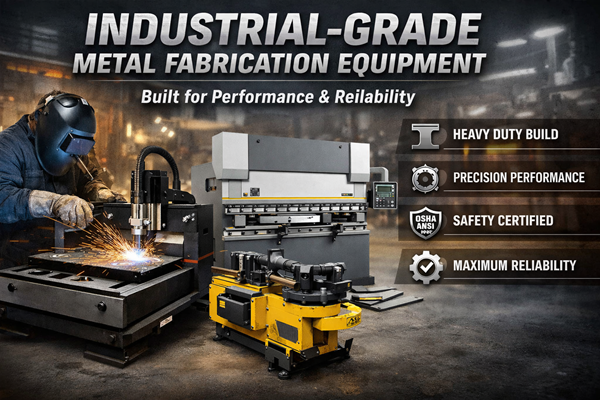
The term industrial grade metal fabrication equipment refers to machinery designed specifically for professional manufacturing environments where performance, durability, and precision are required every day. Following are key characteristics that define industrial-grade metal fabrication equipment.
- Construction and Materials: Industrial-grade equipment uses heavy-duty steel frames, reinforced components, and precision-machined parts. These machines are designed to resist vibration, maintain alignment, and handle high workloads without deformation.
- Performance Standards: Professional fabrication equipment is engineered for high duty cycles and continuous operation. Industrial machines can run for extended periods without overheating or losing accuracy.
- Safety Certifications: Reputable industrial equipment meets recognized standards such as ANSI, OSHA, UL, and ISO quality requirements. These certifications ensure machines are safe to operate, properly guarded, and built to meet workplace regulations in American manufacturing facilities.
- Design Philosophy: Industrial-grade tools are built for production environments, not occasional projects. They have precise controls serviceable components, and a design that supports long-term use with replacement parts.
Why American Fabricators Choose Industrial-Grade Equipment
Here’s why American fabricators heavily rely on industrial grade metal fabrication equipment.
- Return on Investment (ROI) & Total Cost of Ownership: While industrial machines require a higher upfront investment, the long-term cost is often lower. Industrial grade metal fabrication equipment lasts longer, requires fewer repairs, and maintains accuracy over years of operation.
- Reliability & Reduced Downtime: Downtime is one of the most expensive problems in fabrication. When a machine fails, production stops, labor sits idle, and deadlines are missed. Industrial-grade machines are designed to handle heavy workloads without frequent breakdowns. Professional fabrication shops depend on equipment that starts every day, runs consistently, and performs without constant adjustment. Reliability is one of the main reasons experienced fabricators choose industrial-level machinery.
- Precision and Quality Output: Modern fabrication work requires tight tolerances and repeatable results. Whether forming sheet metal, beveling plate, or cutting structural components, accuracy is essential. Industrial grade metal fabrication equipment maintains alignment, consistent pressure, and stable operation even during long production runs. This ensures parts fit correctly, weld properly, and meet customer specifications.
- Durability for Demanding Environments: Fabrication shops run in tough environments. Equipment is exposed to heat, metal dust, vibration, and constant use. Industrial machines are designed to operate in these conditions without premature wear.
American Manufacturing Standards and Certifications
American manufacturing standards provide objective benchmarks that separate quality equipment from inferior alternatives.
- ANSI Standards: These machines are developed through consensus among manufacturers, users, and safety experts over a century of industrial evolution. Equipment meeting ANSI standards is designed, tested, and documented against recognized best practices for safety and performance.
- ISO 9001 Certification: It demonstrates that manufacturers maintain comprehensive quality management systems with documented processes, regular audits, and continuous improvement programs ensuring consistent production quality.
- OSHA Compliance: Equipment engineered to meet Occupational Safety and Health Administration requirements protects workers and shields shops from costly violations and liability exposure.
- UL Certification: This implies independent third-party verification of electrical safety and performance standards, critical for insurance compliance and workplace safety programs.
Making the Right Equipment Investment
Selecting industrial-grade metal fabrication equipment requires systematic evaluation. Consider these critical factors.
Assess Production Requirements: Determine what materials you will process, expected production volumes, and required tolerances. Match equipment capabilities to your actual needs rather than aspirations or worst-case scenarios.
Calculate True ROI: Look beyond purchase price to lifetime costs including maintenance, energy consumption, and replacement timeline.
Verify Manufacturer Reputation: Research how long the company has operated and their track record in the industry. Ask for customer references from shops that have operated similar equipment for 10+ years.
Confirm Parts Availability: Determine the guaranteed parts support period and typical lead times for common replacement components. Equipment is only as reliable as the availability of maintenance parts.
Evaluate Support Infrastructure: Assess the manufacturer’s technical support capabilities, documentation quality, and field service availability. Strong support protects your investment long-term.
Consider Scalability: Industrial-grade equipment should grow with your business, offering upgrade paths and the ability to handle larger orders that drive revenue growth.
Invest in Equipment That Builds Your Business
So, where do you find industrial-grade metal fabrication equipment that doesn’t compromise on quality. For nearly 60 years, Woodward Fab has served American fabricators with industrial-grade equipment designed for production environments. Contact their team today to find out more about their equipment offerings and custom options.

Related Post:
- Metalworking Tool Selection Guide: Match the Tool to the Fabrication Task
- How to Read a Sheet Metal Gauge Chart: Gauge, Thickness & Material Explained
- Sheet Metal Forming Methods: Deep Drawing, Flanging, Hemming & More
- How to Choose the Right Sheet Metal Gauge for Automotive Projects
- Aviation Snips vs Sheet Metal Shears: Which Cutting Tool Should You Use?