
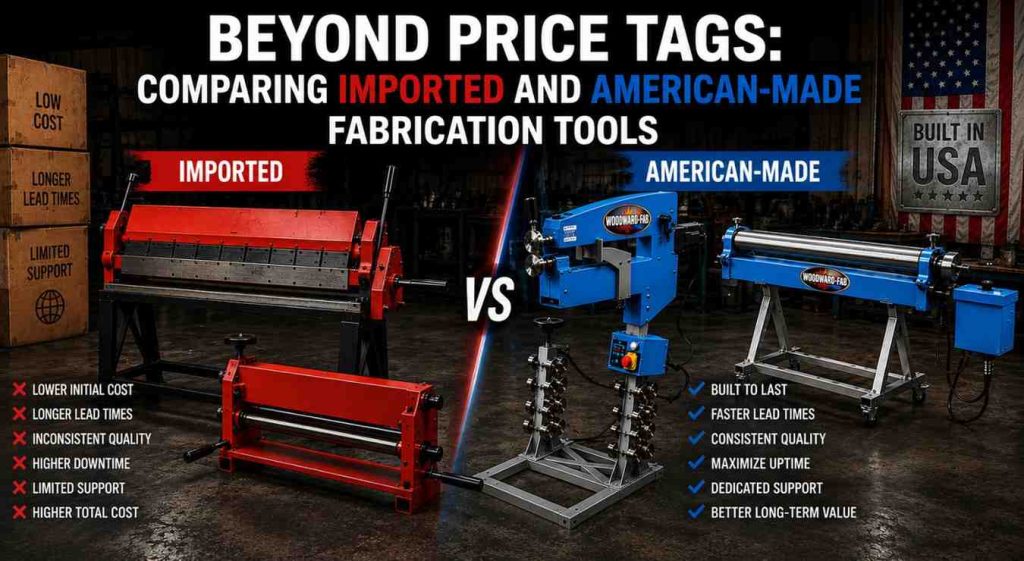
For automotive OEMs, restoration shops, race teams, and sheet metal fabricators, equipment quality is crucial as it directly affects not just daily production but also precision, delivery schedules, rework rates, efficiency, and above all customers’ trust. That is why many fabrication professionals pay close attention to where their tools are made. A low-cost machine may look appealing at first. However, after months of heavy use, the machine may start to vibrate excessively, leading to inconsistent bends and weak frames. This leads to production downtime, added costs, hard-to-find replacement parts, and delayed support. American-made fabrication tools continue to earn respect because they are built with consistency and long-term use in mind. Fabrication shops depend on them for accuracy and precision in forming, shaping, bending, and metal finishing work. This post focuses on the benefits of American-made fabrication tools, a comparative account of imported equipment vs. made in-USA fabrication tools, and more.
Benefits of American-Made Metal Fabrication Equipment
Country of origin is more than a label stamped onto a machine frame. It often reflects manufacturing standards, material quality, machining accuracy, and overall consistency. In fabrication work, these factors directly affect performance, reliability, and long-term value.
- Build Quality and Machine Rigidity: One of the biggest advantages of American-made metal fabrication equipment is its construction quality. Heavy-duty steel frames, industrial-grade components, high-quality welds, and tighter machining tolerances contribute to greater rigidity and durability. A rigid machine minimizes flex and vibration during operation, helping maintain alignment and produce cleaner bends, smoother panels, and more accurate fits.
- Consistent Manufacturing Standards and Quality Control: Made-in-USA fabrication tools are often produced using higher-grade materials and stricter quality control processes. From material selection and machining to assembly and final inspection, tighter oversight helps ensure consistency from one machine to the next. This attention to detail results in more reliable performance and fewer variations in quality over time.
- Replacement Parts Availability: Equipment maintenance becomes much easier when replacement parts are readily available. With made-in-USA fabrication tools, components are typically stocked domestically, making repairs faster and helping extend the life of the equipment. In contrast, some imported machines can become difficult to maintain when parts are delayed or discontinued.
- Accountability and Customer Support: Domestic manufacturers often maintain closer oversight of their production processes and provide more accessible customer support. Fabricators can communicate directly with knowledgeable teams who understand real-world shop applications, making troubleshooting and warranty claims faster and more effective. Reliable support helps reduce downtime and keeps production running smoothly.
- Faster Shipping and Supply Chain Reliability: Domestic inventory generally means shorter lead times for both equipment and replacement parts. Unlike overseas supply chains, which can be affected by shipping delays, trade disruptions, geopolitical events, or natural disasters, domestic sourcing offers greater reliability and responsiveness. This helps shops maintain productivity with fewer supply chain uncertainties.
Imported vs American-made Metal Fabrication Equipment Comparison
Imported fabrication tools serve an important role in the market. They often provide affordable entry points for smaller shops or occasional users. But long-term performance can vary significantly. Lower-cost imported equipment may reduce upfront spending, though consistency between machines is sometimes less predictable. Material thickness, machining quality, and frame rigidity can differ between production runs. USA-made equipment generally focuses more on durability, repeatability, and long-term ownership value.
Here is where the differences usually become noticeable:
| Imported Equipment | USA-Made Equipment |
| Lower upfront pricing | Greater long-term value |
| Variable quality control | More consistent manufacturing |
| Limited parts availability | Easier repairs and maintenance |
| Longer shipping timelines | Faster domestic delivery |
| Shorter lifespan under heavy use | Better durability and reliability |
Long-Term Cost Savings of Premium Tools
Fabricators want fabrication equipment that works correctly every morning without constant adjustments or troubleshooting and hence most of them prefer investing in premium fabrication equipment. This ensures long-term ownership. Here’s how premium tools lead to improved productivity and cost savings.
- Lower Maintenance Needs: Durable fabrication equipment naturally requires fewer repairs over time. Fewer breakdowns mean fewer interruptions in daily shop activity.
- Reduced Downtime: Every avoided repair translates into more uptime. More uptime means more production hours. That compounding effect builds real value across the life of a machine.
- Higher Daily Output: When machines operate reliably and perform consistently, shops can focus on output instead of troubleshooting. Production flows more smoothly without constant interruptions.
- Reduced Material Waste: Precision equipment directly lowers scrap rates. A tubing bender that maintains geometry produces accurate bends, while a bead roller that tracks consistently avoids reruns. These savings add up every single day.
- Stronger Long-Term Reliability: Reliable machines keep processes stable over time. That stability helps shops plan production with confidence instead of reacting to unexpected failures.
- Better Resale Value: Quality machines typically hold value longer. Well-maintained American-made equipment often performs well on the secondary market compared to lower-cost imports.
- Lower Total Cost Over Time: Replacing cheaper tools repeatedly often costs more than investing once in dependable equipment. Premium fabrication tools reduce long-term spend by improving uptime, accuracy, and lifecycle value.
- Operational Stability: At the core, a good-quality equipment supports smoother operations. This leads to fewer interruptions, more predictable results, and overall stability, and this is what keeps fabrication shops efficient and profitable over time.
In an industry where precision matters every day, investing in quality fabrication machinery remains one of the smartest decisions a shop can make. Woodward Fab continues to earn the trust of fabricators through durable, professional-grade equipment, readily available replacement parts, and fabrication-focused technical support that helps keep operations running efficiently. Their commitment to consistent performance and long-term reliability makes them a trusted partner for fabrication shops, restoration builders, and automotive professionals alike. Contact their team today for any further information you require.

Related Post:
- How to Choose the Right Sheet Metal Gauge for Automotive Projects
- Aviation Snips vs Sheet Metal Shears: Which Cutting Tool Should You Use?
- Why Does Sheet Metal Crack When Bending? Causes and Solutions
- How to Fabricate Curved Automotive Body Panels With a Shrinker Stretcher
- Sheet Metal Cutting Tolerances: How Much Accuracy Do You Need?