
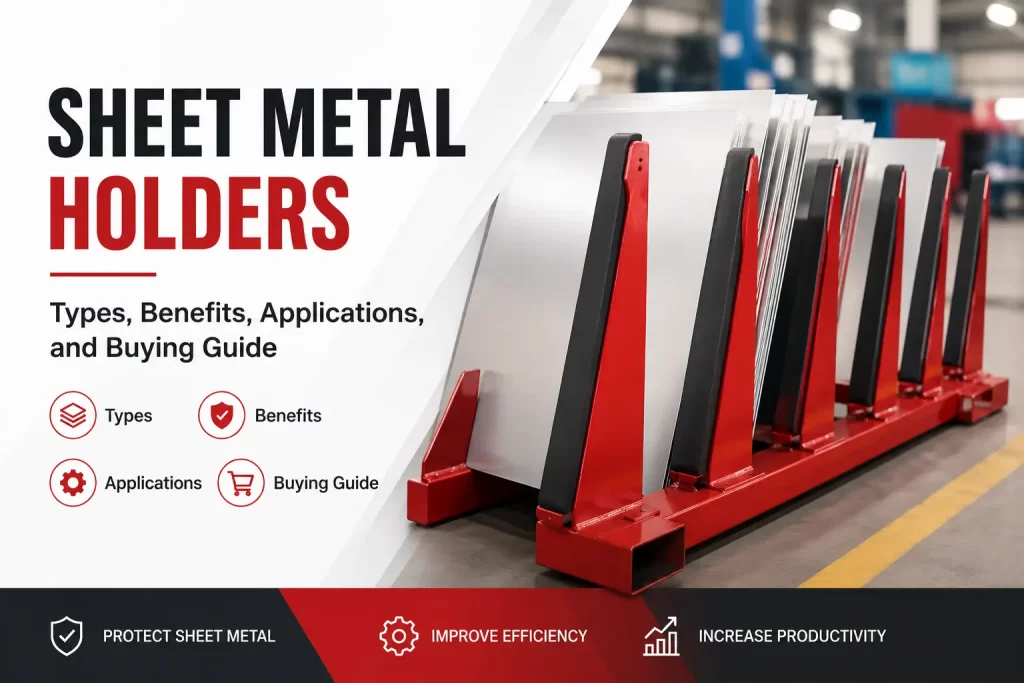
Sheet metal fabrication is vital across industries, requiring precision in cutting, bending, and shaping metal sheets. To achieve accurate and consistent results, specialized tools are necessary to secure the material and prevent unwanted movement during operations. Sheet metal holders are tools designed to securely hold metal sheets in place during fabrication. They provide stability, preventing movement and ensuring accuracy during operations like cutting, welding, and bending. These holders are essential for maintaining alignment and preventing shifts during the fabrication process. Understanding various types of sheet metal holders and their applications is essential for ensuring optimal precision and efficiency in fabrication processes. This guide highlights the types of sheet metal holders, their uses, and key considerations to help you choose the right tool for your needs.
Types of Sheet Metal Holders
There are several types of sheet metal holders, each designed for specific tasks and metalworking environments. Below are some common types:
- Magnetic Holders: These holders use powerful magnets to secure metal sheets. They are especially useful for handling thin or irregularly shaped pieces of metal, where clamping might not be feasible. Magnetic holders provide flexibility, enabling quick repositioning of metal sheets during various fabrication processes.
- Clamp Holders: They use mechanical clamping mechanisms to firmly hold sheet metal in place. These holders provide a strong grip and are ideal for tasks requiring high precision. Clamp holders are typically used in fabrication shops where stability and accuracy are crucial during operations.
- Adjustable Holders: These metal holders offer versatility by accommodating different sheet sizes and thicknesses. These holders can be adjusted to fit various metal pieces, making them an excellent choice for environments with varying material sizes. Adjustable holders ensure a secure hold while offering flexibility for diverse tasks.
Read our Blog Sheet Metal Bending & K-Factor Calculations: A Comprehensive Guide
Benefits of Sheet Metal Holders
Sheet metal holders have gained immense momentum due to their following benefits:
- Increased Precision: Sheet metal holders ensure that the metal stays in place during fabrication processes. This prevents any movement or misalignment that could result in inaccuracies, leading to higher precision in the final product.
- Improved Safety: By securely holding metal sheets, these tools reduce the risk of sheet getting shifted, which could cause accidents or injuries. This makes sheet metal holders an essential safety feature in fabrication environments.
- Time Efficiency: With sheet metal holders, operators spend less time realigning or repositioning metal sheets. This efficiency leads to faster workflow and quicker turnaround times on projects, boosting overall productivity.
- Reduced Material Waste: A secure hold reduces the chances of errors, which can result in wasted material. This helps save money and ensures optimal use of resources.
- Versatility: Magnetic, clamp, and adjustable holders can be used for a wide range of metal types, sizes, and fabrication techniques. This versatility allows users to handle various materials and tasks without needing multiple specialized tools.
- Cost Savings: By preventing errors and reducing the need for rework, sheet metal holders help save costs in the long run. This reduces downtime, further increasing productivity and efficiency.
Sheet Metal Holders Applications
Sheet metal holders find uses in several applications. Here are some typical ones:
- Industrial Use: In heavy manufacturing environments, sheet metal holders secure large metal sheets during machining and cutting operations. They stabilize sheets during laser cutting or CNC machining, minimizing misalignment and errors. In heavy equipment manufacturing, where metal sheets are often thick and large, reliable holders ensure material remains fixed, improving operational efficiency and reducing costly mistakes.
- Fabrication Shops: Custom fabrication shops work with various sheet metal thicknesses and sizes. Here, holders provide the stability needed for intricate processes like forming precise bends or cuts. By securing metal sheets, holders help ensure clean cuts, accurate welds, and smooth bends, which are critical for producing high-quality custom metal components.
- Automotive Manufacturing: In automotive manufacturing, metal holders stabilize metal parts during stamping, welding, and assembly processes. They are used to secure car body panels, engine components, and structural parts, ensuring proper alignment for high-volume, automated production. In processes like spot welding, maintaining precise alignment prevents defects and ensures the structural integrity of the final product.
- Aerospace: Aerospace manufacturing requires precision for components like fuselage panels and wing structures. Sheet metal holders stabilize these lightweight metal components during CNC machining, drilling, and welding. The holders ensure parts remain securely positioned while minimizing distortion during operations, which is critical for meeting aerospace standards.
- Construction and Structural Fabrication: In this, metal holders secure large metal beams, frames, and panels during welding and assembly. They ensure correct alignment of structural elements in building frameworks or infrastructure projects, like bridges and commercial buildings. The holders provide the necessary stability for precision welding, reducing material waste and improving the quality of finished structures.
How to Choose the Right Sheet Metal Holders
Selecting the right metal holders requires considering several factors, including:
- Material Type: Ensure the holder is compatible with the metal type you’re working with. Different metals, such as steel, aluminum, or copper, have varying properties, and the holder must securely support the material without causing deformation or slippage.
- Size and Thickness: Select a holder that can accommodate the size and thickness of the metal sheets. The holder should be capable of adjusting to different dimensions to maintain a firm grip, whether the material is thin or thick.
- Load Capacity: Ensure the holder is capable of supporting the weight of the sheet metal. For heavy-duty applications, such as large metal sheets or thick materials, choose a holder that can maintain stability without compromising performance or safety.
- Precision Requirements: If the tasks require high levels of accuracy, choose a holder that ensures a firm and stable grip on the metal. This is especially crucial when dealing with complex cuts or welds where even minor shifts in position can lead to inaccuracies.
- Environment and Conditions: Consider the working environment, including available space and the conditions under which the holder will be used. If the workspace is confined or needs frequent repositioning, choose a holder that provides flexibility and easy adjustment without sacrificing stability.
- Ease of Use: Opt for holders that are easy to set up, adjust, and reposition, reducing downtime and improving workflow efficiency. A holder that simplifies setup and adjustments helps enhance productivity, particularly in environments where multiple sheet sizes or materials are used frequently.
While sheet metal holders are crucial for keeping the sheet in place, using the right tools is absolutely essential to get the right output. The quality and fitment of sheet metal fabrication tools has a significant impact on the final outcome, directly influencing both precision and overall efficiency. At Woodward Fab, we offer a comprehensive range of equipment that support a variety of fabrication needs. Our bench vises, sheet metal brakes, and 3-in-1 machine/brake sections offer the stability and control needed for bending, shaping, and cutting tasks. These versatile tools ensure that every project is completed with utmost precision. For any further information regarding our fabrication tools, contact our team today.

Related Post:
- How to Choose the Right Sheet Metal Gauge for Automotive Projects
- Aviation Snips vs Sheet Metal Shears: Which Cutting Tool Should You Use?
- Why Does Sheet Metal Crack When Bending? Causes and Solutions
- How to Fabricate Curved Automotive Body Panels With a Shrinker Stretcher
- Sheet Metal Cutting Tolerances: How Much Accuracy Do You Need?