
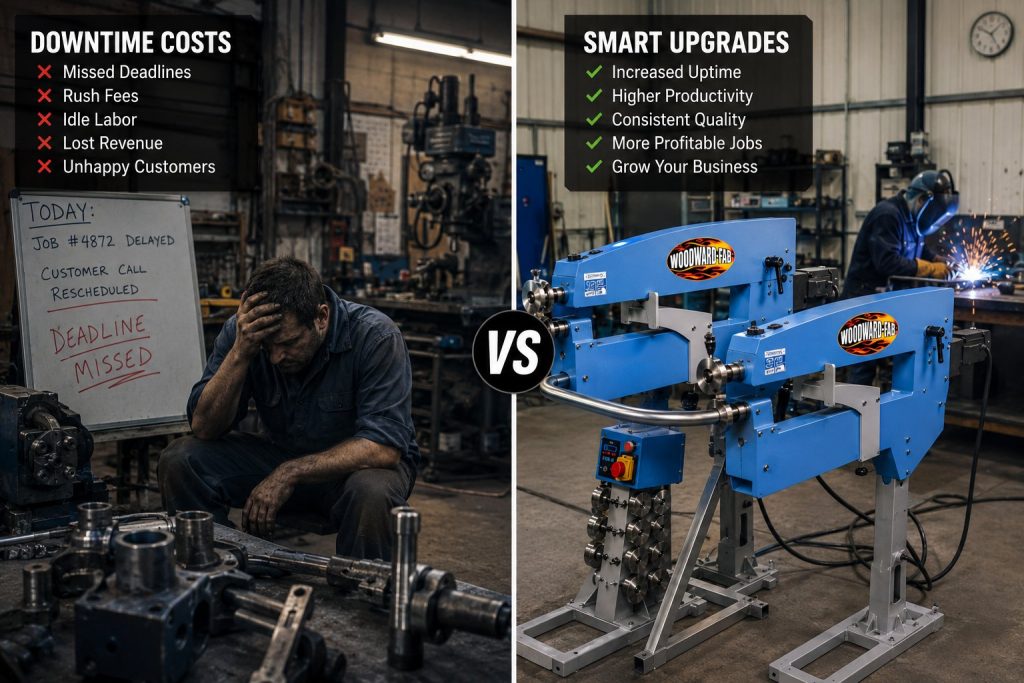
Fabrication shops depend on production consistency, delivery timelines, and machine reliability for steady business growth. A single machine failure can interrupt operations, delay shipments, increase labor costs, and reduce output. Many shop owners postpone equipment investments because replacement costs appear higher initially. However, fabrication downtime costs often exceed upgrade expenses over time. Lost production hours, missed deadlines, overtime labor, emergency repairs, and reduced customer confidence can quickly impact revenue and operational stability . Modern fabrication equipment helps shops improve efficiency, maintain reliable production schedules, and reduce costly disruptions. This post explores the hidden costs of fabrication downtime, the risks of delaying equipment upgrades, and how modern fabrication equipment can improve productivity and long-term ROI.
The Hidden Costs of Fabrication Equipment Downtime
Production interruptions affect more than machine availability. They influence labor scheduling, customer confidence, workflow planning, and overall production capacity throughout the fabrication process.
- Lost Revenue: Unexpected downtime reduces machine utilization and limits completed orders. Most shops notice revenue losses slowly, especially during recurring production interruptions and delayed project scheduling.
- Idle equipment slows production and reduces overall manufacturing capacity. .
- Delayed manufacturing schedules increase order backlogs, creating operational pressure and forcing businesses to postpone profitable fabrication projects with committed delivery timelines.
- Emergency outsourcing often increases operational costs because third-party fabrication services charge premium rates.
- Missed Deadlines: Late deliveries create operational pressure for both fabricators and customers. Industrial buyers prefer suppliers who maintain reliable schedules and stable production consistency during demanding manufacturing projects.
- Delayed fabrication orders interrupt customer production schedules, especially when components support assembly operations, construction activities, or equipment manufacturing projects with fixed deadlines.
- Frequent delays damage customer trust and make buyers question long-term reliability.
- Shops often pay higher freight costs for expedited shipping to recover lost time after downtime incidents.
- Labor Inefficiencies: Labor expenses continue regardless of machine availability. Downtime reduces workforce productivity and creates workflow disruptions that affect multiple fabrication departments simultaneously during daily production operations.
- Operators remain inactive during equipment failures, reducing productive labor utilization while businesses continue paying wages throughout delayed production periods unnecessarily.
- Maintenance teams shift attention from preventive servicing activities into emergency troubleshooting tasks, increasing repair pressure and reducing planned equipment maintenance efficiency significantly.
- Downtime frequently results in overtime scheduling to recover delayed production.
Why Delaying Equipment Upgrades Impact Profitability
Many metal fabrication shops continue using aging machinery because replacement investments appear expensive initially. Over time, recurring repairs and inconsistent production create larger operational losses.
- Rising Maintenance Expenses: Older fabrication systems require frequent servicing and replacement components. Maintenance expenses increase as machines wear down.
- Frequent repairs increase maintenance budgets without improving production efficiency, causing businesses to spend continuously while operational reliability remains unstable throughout fabrication processes.
- Finding replacement parts for outdated machinery becomes difficult when manufacturers discontinue components, leading to longer downtime during breakdowns.
- Emergency repair visits often involve higher service charges and longer delay.
- Reduced Production Efficiency: Aging fabrication equipment commonly operates slower and produces inconsistent output. These inefficiencies reduce throughput while increasing operational pressure throughout busy manufacturing schedules and production cycles.
- Slower machine performance limits completed production volume daily, reducing manufacturing capacity and affecting profitability during high demand fabrication projects significantly.
- Older systems require additional manual adjustments, increasing operator dependency.
- Inconsistent machine performance can lead to material waste and higher scrap rates. .
- Limited Growth Opportunities: Unreliable equipment restricts production scalability. Shops handling increased customer demand often struggle because aging machinery limits capacity expansion and operational flexibility during larger projects.
- Production instability prevents fabrication businesses from accepting urgent contracts because equipment reliability concerns affect scheduling confidence during demanding manufacturing periods consistently.
- Expanding customer requirements become difficult managing when machinery cannot support increased workloads or maintain reliable operational performance throughout production schedules.
- Businesses lose competitive opportunities because buyers prefer fabrication suppliers capable of maintaining stable production capacity and dependable delivery commitments consistently.
Signs Your Shop Needs Equipment Modernization
Most fabrication businesses tolerate equipment issues longer than necessary. However, recurring operational problems usually indicate modernization requirements affecting profitability and production reliability.
- Common Operational Warning Signs: Equipment problems often appear gradually before serious production failures occur. Recognizing these warning indicators early helps businesses reduce shop downtime and operational losses.
- Frequent unplanned downtime affecting daily schedules usually indicates declining equipment reliability and increasing operational risks across fabrication production environments consistently.
- Rising repair expenses every quarter suggest maintenance spending is replacing operational value instead of improving machine productivity or workflow stability significantly.
- Difficulty sourcing replacement components creates extended downtime periods because outdated machinery depends on discontinued parts and delayed supplier availability frequently.
- Production Quality Concerns: Declining equipment performance usually affects fabrication quality before complete breakdowns occur. Many shops first notice modernization requirements through production inconsistency and increased rework situations.
- Inconsistent tube bending, cutting, or forming results increase scrap generation and reduce material efficiency across fabrication operations handling precision manufacturing requirements regularly.
- Older systems struggle maintaining tighter tolerances required for modern metal fabrication projects, affecting production quality and customer satisfaction during industrial manufacturing applications.
- Rework requirements increase labor expenses because operators spend additional time correcting fabrication inconsistencies caused by aging machinery performance limitations frequently.
How Ready to Ship Equipment Reduces Downtime Risks
Equipment lead times create serious operational pressure during unexpected breakdowns. Ready to ship fabrication machinery helps businesses restore production faster and reduce prolonged downtime exposure.
- Faster Operational Recovery: Quick equipment availability helps fabrication shops stabilize production schedules faster after equipment failures or urgent capacity expansion requirements during demanding manufacturing operations.
- Immediate equipment access reduces prolonged production interruptions. .
- Faster installation planning improves workflow recovery because operators and maintenance teams prepare production areas earlier during replacement equipment deployment processes efficiently.
- Production schedules recover quicker when businesses access replacement machinery immediately instead of continuing temporary outsourcing arrangements during delayed equipment procurement situations.
- Improved Production Flexibility: Additional fabrication capacity creates operational flexibility and reduces production pressure during maintenance events, equipment servicing requirements, or unexpected workflow disruptions consistently.
- Backup equipment reduces single point production failures, improving operational reliability throughout fabrication environments handling time sensitive industrial manufacturing projects regularly.
- Shops can balance workloads more efficiently across multiple machines. .
- Maintenance planning improves significantly when businesses maintain secondary production capacity supporting operational continuity during scheduled servicing activities consistently.
Comparing Downtime Costs vs Equipment Upgrade Costs
Comparing downtime losses against modernization investments helps fabrication businesses evaluate long term operational value more accurately. Most recurring downtime expenses remain hidden initially during production planning.
| Specification | Downtime Costs | Equipment Upgrade |
| Production Output | Lost production hours reduce throughput capacity and delay scheduled fabrication projects during demanding operational periods regularly. | Improved machinery increases throughput consistency and supports stable production scheduling across fabrication operations handling larger customer requirements efficiently. |
| Maintenance Expenses | Emergency repair requirements increase operational expenses while repeated servicing interrupts workflow consistency throughout fabrication production schedules continuously. | Predictable maintenance planning reduces unexpected failures and improves operational reliability during active manufacturing and fabrication production activities consistently. |
| Labor Utilization | Overtime wages increase because operators recover delayed production schedules after repeated equipment breakdowns affecting workflow coordination significantly. | Modern equipment improves labor efficiency through stable production performance and reduced operational interruptions during regular fabrication activities consistently. |
| Operational Stability | Frequent downtime creates scheduling disruptions and workflow bottlenecks affecting multiple departments during active production operations continuously. | Equipment modernization improves operational stability and supports better workflow coordination across fabrication, assembly, and finishing departments consistently. |
Improve Shop Efficiency with Reliable Fabrication Equipment
Reducing fabrication downtime costs starts with reliable equipment, stable production planning, and faster operational recovery strategies. Modern fabrication systems improve throughput, workflow consistency, and delivery reliability while lowering recurring repair expenses.. Woodward Fab offers ready-to-ship fabrication equipment designed to support productivity, operational flexibility, and long-term fabrication equipment ROI. Get it in touch with our experts for further information.
FAQs
Can outdated software systems increase shop downtime?
Older control software creates communication delays between fabrication equipment and automation systems. Updated software improves production coordination, scheduling efficiency, and machine response consistency significantly.
Why is predictive maintenance important for fabrication shops?
Predictive maintenance identifies performance issues before failures occur. Fabrication businesses reduce unexpected downtime risks while improving maintenance scheduling and operational planning efficiency considerably.
How does equipment downtime affect inventory management?
Production interruptions create material holding delays, unfinished orders, and workflow imbalance. Inventory planning becomes difficult because fabrication schedules shift unpredictably during equipment failures regularly.
How does equipment modernization improve customer retention?
Reliable machinery improves delivery consistency, production quality, and operational stability. Customers prefer fabrication suppliers maintaining dependable schedules and predictable manufacturing performance during long term projects.

Related Post:
- Metalworking Tool Selection Guide: Match the Tool to the Fabrication Task
- How to Read a Sheet Metal Gauge Chart: Gauge, Thickness & Material Explained
- Sheet Metal Forming Methods: Deep Drawing, Flanging, Hemming & More
- How to Choose the Right Sheet Metal Gauge for Automotive Projects
- Aviation Snips vs Sheet Metal Shears: Which Cutting Tool Should You Use?