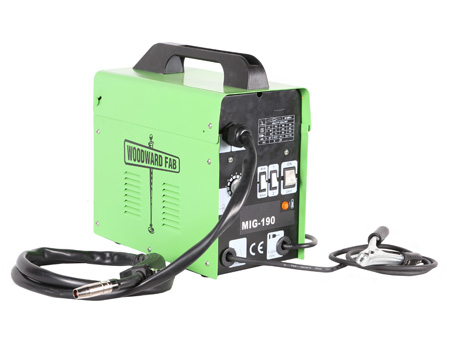
 120 AMP MIG Welder MIG-190
MIG Welders
MIG Welding Machines
MIG welders, or Metal Inert Gas welders, are versatile welding machines designed for both home and light industrial use. They use a continuous wire feed process to create strong welds, primarily on mild steel. These welders operate on electric power and can utilize flux core wire, eliminating the need for gas. They are known for their ease of use and efficiency in various welding applications.
Features of MIG Welders:
- Ideal for DIY projects and smaller industrial tasks.
- Designed for durability and protection of internal components.
- Ensures reliable performance and simplifies maintenance.
- Compatible with standard electrical outlets for easy setup.
- Machines include power source, MIG gun and cable, ground cable with clamp, spool of weld wire, and power cord for immediate use.
- Easy to operate, making it suitable for beginners and experienced welders alike.
- Lightweight and portable for convenience in various workspaces.
- Suitable for welding mild steel, with adjustable settings for different thicknesses.
Why wait? Shop now and elevate your welding projects with our top-quality MIG welders. Unleash your potential and experience a new level of precision, performance, and perfection. It’s time to take your welding game to new heights—get ready to transform your creations like never before!
FAQs for MIG Welders:
How Does a MIG Welder Work?MIG welders operate by feeding a continuous wire electrode through the welding gun, while simultaneously releasing an inert gas, typically a mixture of argon and carbon dioxide. This gas shields the weld pool from atmospheric contamination, ensuring a clean and strong weld. As the electric current passes through the wire, it creates an arc that melts both the electrode and the base metal, effectively fusing them together to form a durable joint
What Materials Can Be Welded Using a MIG Welder?MIG welders are versatile and can be used to weld various metals, including steel, stainless steel, aluminum, and some non-ferrous metals.
What Are the Advantages of Using a MIG Welder?MIG welding offers several key advantages, making it a popular choice among welders:
- MIG welders are user-friendly, making them ideal for both beginners and experienced welders.
- The continuous wire feed allows for quick and efficient welding, reducing project time.
- MIG welding produces strong, clean welds with a smooth finish.
- The process generates less spatter compared to other welding methods, resulting in less cleanup.
- MIG welders can effectively handle a variety of materials, including thin sheets, making them suitable for a wide range of applications.
Safety is essential when using welding equipment. Always wear appropriate personal protective equipment (PPE), including a welding helmet, heavy-duty gloves, long-sleeved clothing, and safety glasses to protect against sparks and UV radiation. Ensure your workspace is well-ventilated to minimize exposure to harmful welding fumes and gases. Additionally, keep a fire extinguisher nearby and maintain a clutter-free work area to prevent accidents.
What Size MIG Welder Should I Choose?The size of the MIG welder you select depends on the thickness of the metal you'll be welding. For light to medium-duty tasks, a 120V MIG welder is typically adequate. However, for thicker materials and more demanding projects, a more powerful 220V MIG welder is recommended. Assess your specific welding needs to ensure you choose the right welder for optimal performance.
How Do I Maintain a MIG Welder?Regular maintenance is crucial for ensuring optimal performance of your MIG welder. Start by cleaning the wire feed system to prevent jams and ensure smooth operation. Replace consumables, such as contact tips and nozzles, as needed to maintain weld quality. Additionally, keep the welding machine free from dust and debris to prolong its lifespan. Always follow the manufacturer's guidelines for specific maintenance procedures to ensure your welder operates efficiently and reliably.
What factors affect the quality of MIG welds?Several key factors influence the quality of MIG welds, including:
- Welder Settings: Ensure voltage and wire feed speed are correctly adjusted for the material thickness.
- Wire Type and Diameter: Choose the appropriate welding wire for your specific application.
- Shielding Gas: Use the right gas mixture to protect the weld pool from contamination.
- Electrode Extension: Maintain the correct distance between the contact tip and the workpiece for optimal arc stability.
- Welding Technique: Employ proper techniques, such as travel speed and angle, to achieve consistent and high-quality welds.
By carefully considering these factors, you can significantly enhance the quality of your MIG welds.