
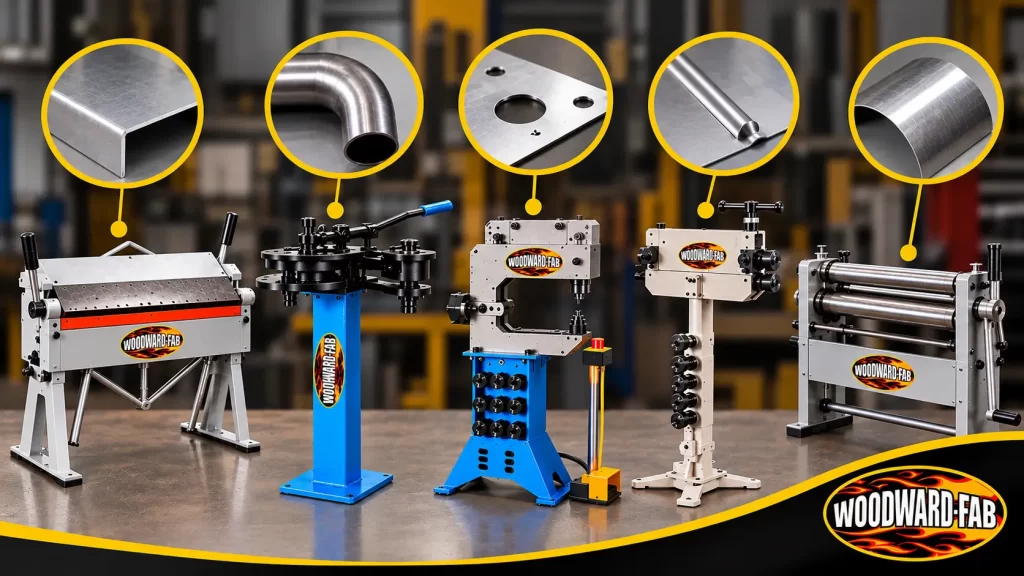
Choosing the right tool is an important part of successful metal fabrication. The correct equipment can make cutting, bending, forming, shaping, and finishing metal more accurate and efficient.
Using the wrong tool, on the other hand, can lead to poor results, damaged material, excessive effort, or unsafe working conditions.
With so many metalworking tools available, it can be difficult to determine which one is appropriate for a particular fabrication task. A tool designed for bending sheet metal may not be suitable for shaping thick plate, while a cutting tool intended for one material may not perform well on another.
This guide explains how to approach metalworking tool selection based on the fabrication task, material, thickness, accuracy requirements, and project scale.
Start with the fabrication operation, then evaluate the material type, material thickness, required accuracy, production volume, and available workspace. Finally, compare those requirements with the tool’s rated capacity and intended application.
What Are Metalworking Tools?
Metalworking tools are equipment and hand tools used to cut, bend, form, shape, join, or finish metal. They range from basic hand tools to specialized machinery designed for specific fabrication operations.
The right tool depends on what you need to accomplish. Before selecting equipment, identify the operation first rather than choosing a tool simply because it is commonly used.
A Practical Metalworking Tool Selection Process
A practical selection process starts with five questions. Answering these questions can narrow down the available options considerably.
- What fabrication task needs to be performed?
- What type of metal are you working with?
- What is the material thickness?
- How accurate does the finished part need to be?
- How frequently will the tool be used?
For example, forming a precise bend in sheet metal requires different equipment from cutting a large plate or creating a curved metal component.
Match the Tool to the Fabrication Task
The first step is identifying the operation you need to perform. The following table provides a general starting point for matching common fabrication tasks with suitable equipment.
| Fabrication Task | Common Tool or Equipment |
|---|---|
| Cutting sheet metal | Shears, snips, saws, plasma or other suitable cutters |
| Creating precise bends | Sheet metal brake or press brake |
| Creating curves | Rollers or forming equipment |
| Shaping sheet metal | Forming machines, hammers, and dies |
| Creating holes | Drill press, punches, and hole saws |
| Joining metal | Welding equipment and fasteners |
| Measuring and layout | Calipers, gauges, squares, and scribes |
| Surface finishing | Grinders, files, and deburring tools |
This task-first approach helps prevent the common mistake of selecting equipment based only on the material.
Choose the Tool Based on the Fabrication Task
The first step is identifying the operation. Cutting, bending, forming, drilling, joining, and finishing each require different equipment capabilities.
Once the operation is clear, eliminate tools that are not designed for that specific task before comparing capacity, features, or price.
Select the Right Cutting Tool
Cutting is one of the most common fabrication operations. The appropriate metal fabrication tools depend on the material type, thickness, cut shape, accuracy requirements, and production volume.
For thin sheet metal, hand-operated snips or shears may be suitable for smaller jobs. Mechanical shears can provide faster and more consistent cuts for larger quantities.
For thicker material or applications requiring different cutting capabilities, saws, plasma cutting systems, or other specialized equipment may be considered.
- Maximum material thickness
- Material type
- Required cut length
- Straight versus curved cuts
- Desired edge quality
- Production volume
The goal is to select equipment with sufficient capacity without using unnecessarily complex machinery for a simple task.
Use a Sheet Metal Brake for Controlled Bends
A sheet metal brake is designed to bend sheet metal into straight, controlled angles and profiles. It is particularly useful when fabricating brackets, panels, enclosures, channels, and other components requiring accurate bends.
When selecting a brake, consider:
- Maximum sheet thickness
- Maximum bending width
- Material type
- Required bend angle
- Bend radius
- Tooling requirements
- Available workspace
For example, a small hand-operated brake may be practical for lighter sheet metal and smaller projects, while heavier fabrication may require a larger or powered machine.
The material’s thickness and mechanical properties should always be checked against the machine’s rated capacity.
Learn more about Woodward Fab sheet metal bending equipment when evaluating equipment for controlled bends.
Select Metal Shaping Tools Based on the Desired Form
Metal shaping tools are used to gradually change the shape or contour of metal. These can include hammers, dollies, forming dies, shrinkers, stretchers, rollers, and specialized forming equipment.
The best option depends on the shape being created. Creating a gentle curve may require different equipment from producing a flange, bead, or complex contour.
- Shape of the finished component
- Material thickness
- Required radius
- Amount of material deformation
- Repeatability
- Surface finish
For one-off or custom work, manual shaping tools may provide flexibility. For repeated production, specialized forming equipment can provide greater consistency.
Consider Metal Thickness
Material thickness is one of the most important factors in selecting metalworking equipment.
Thin sheet metal can often be processed using lighter-duty equipment. As material thickness increases, greater force and machine capacity may be required.
Thickness also affects:
- Cutting force
- Bending force
- Forming requirements
- Tool wear
- Welding requirements
- Finished-part weight
Never assume that a tool capable of working with one thickness will automatically be suitable for a thicker or different material.
Consider the Type of Metal
Not all metals behave the same way during fabrication.
Steel, stainless steel, aluminum, copper, and other alloys can have different levels of strength, hardness, ductility, and formability.
For example, a tool or process that works well for mild steel may require different settings or considerations when used with aluminum or stainless steel.
When selecting fabrication equipment, verify that it is appropriate for the material being processed.
Think About Accuracy and Repeatability
The required accuracy of the finished component should influence tool selection.
For simple repair work or one-off projects, a basic tool may provide sufficient control. For components requiring consistent dimensions across multiple parts, more precise equipment and tooling may be necessary.
Consider:
- Dimensional tolerances
- Bend-angle accuracy
- Repeatability
- Tooling precision
- Measurement requirements
Measuring tools are also an important part of fabrication. Calipers, gauges, squares, and other layout tools can help verify dimensions before and after forming operations.
Match the Tool to Production Volume
The number of parts you need to produce can significantly influence your choice of equipment.
For occasional fabrication, manually operated tools may be practical because they offer flexibility without requiring complex setup.
For repeated production, powered or specialized equipment may provide greater efficiency and consistency.
For example, manually bending a few components may be reasonable, while producing hundreds of identical parts may require dedicated forming equipment or production tooling.
Metalworking Equipment Buying Checklist
Before purchasing or setting up metalworking equipment, review the following requirements.
- Operation: What exact fabrication task will the equipment perform?
- Material: Which metals and grades will be processed?
- Thickness: What is the minimum and maximum material thickness?
- Capacity: Does the machine have sufficient rated capacity?
- Accuracy: What dimensional or bend-angle accuracy is required?
- Volume: Is the equipment intended for occasional work or repeated production?
- Workspace: Is there sufficient room for installation and operation?
- Tooling: Are additional dies, blades, punches, rollers, or accessories required?
- Maintenance: What maintenance and service requirements should be considered?
Common Mistakes When Selecting Metalworking Tools
The least expensive tool is not necessarily suitable for the job. Capacity, durability, accuracy, and intended application should also be considered.
Always check the tool’s rated capacity against the thickness of the material you intend to process.
A tool designed for cutting should not be substituted for equipment intended for controlled bending or forming.
Some equipment requires substantial floor space, electrical capacity, ventilation, or additional accessories. Check installation requirements before purchasing or setting up machinery.
The machine itself may not be enough. Dies, blades, punches, rollers, clamps, or other accessories may be required for a particular operation.
Frequently Asked Questions
How do I choose the right metalworking tool?
Start by identifying the fabrication task, then consider the metal type, thickness, required accuracy, production volume, and available workspace. Match these requirements with the tool’s rated capabilities.
What is a sheet metal brake used for?
A sheet metal brake is primarily used to create controlled bends in sheet metal. It can produce angles, channels, panels, boxes, and other straight-bent profiles.
What are metal shaping tools used for?
Metal shaping tools are used to change the contour or shape of metal. Depending on the application, they may include hammers, dies, rollers, shrinkers, stretchers, and other forming equipment.
What should I consider before buying metalworking equipment?
Consider the material and thickness you work with, the types of operations you perform, required accuracy, production volume, machine capacity, workspace, tooling requirements, and maintenance needs.
Conclusion
Selecting the right tool starts with understanding the fabrication task rather than simply choosing from a list of metalworking tools. Cutting, bending, forming, shaping, drilling, joining, and finishing each require different capabilities.
When evaluating metal fabrication tools, consider the material, thickness, desired shape, accuracy, production volume, and machine capacity. A sheet metal brake, for example, is appropriate for controlled bending, while specialized metal shaping tools may be better suited for creating curves and contours.
By matching the tool to the task and verifying its capacity before use, fabricators can develop a more efficient and consistent workflow while choosing equipment that fits the requirements of their projects.
Find Equipment for Your Sheet Metal Projects
Explore Woodward Fab’s range of sheet metal fabrication equipment for bending, forming, shaping, and other metalworking applications.

Related Post:
- How to Read a Sheet Metal Gauge Chart: Gauge, Thickness & Material Explained
- Sheet Metal Forming Methods: Deep Drawing, Flanging, Hemming & More
- How to Choose the Right Sheet Metal Gauge for Automotive Projects
- Aviation Snips vs Sheet Metal Shears: Which Cutting Tool Should You Use?
- Why Does Sheet Metal Crack When Bending? Causes and Solutions